Good Planet News Weekly, 15 October

Wednesday, October 15, 2025

Buen Vivir in Practice — Restoration, Innovation & Community Resilience

Buen Vivir teaches that ecological wellbeing and human dignity are intertwined. This week’s stories, from Australian rivers to Indian streets, Tanzanian hills to Toronto’s buried soils show how communities are regenerating life through care, knowledge, and reciprocity.


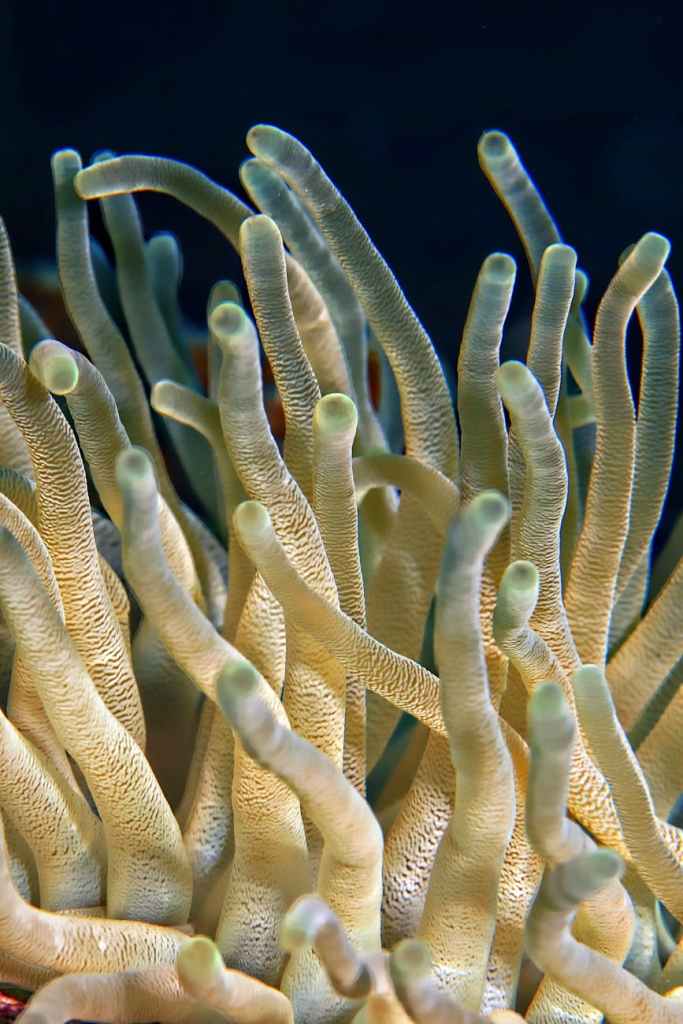
1. AI-Driven Coral Reseeding on the Great Barrier Reef (Australia)

Scientists have developed AI-powered coral re-seeding devices that autonomously identify and plant coral substrates across the reef, dramatically increasing restoration speed and accuracy.
Read more →


Buen Vivir connection: Reciprocity with ecosystems, technology as ally, holistic wellbeing.


Why it matters: Manual coral restoration is slow and resource-intensive. These autonomous tools accelerate recovery and extend human care to otherwise unreachable reef areas — a model for coexistence between technology and nature.
 

2. Noongar-Led Restoration of Collie River Pools (Australia)

The Danju Noongar Landcare group has restored two at-risk river pools in Western Australia’s Upper Collie River, reviving native fish and crustacean habitats while protecting culturally significant waters.
Read more →


Buen Vivir connection: Community stewardship, kinship with land and water, intergenerational care.


Why it matters: These river pools act as ecological refuges during dry spells. The project strengthens biodiversity, cultural continuity, and local stewardship. This is proof that restoration led by Traditional Owners brings enduring ecological and social health.


3. Ecological Entrepreneurs Regenerating Tanzania’s Landscapes

Three innovators from IUCN’s restoration incubation program are transforming degraded lands into sustainable enterprises, from seed banks to soil-health ventures, linking livelihoods and landscape renewal.
Read more →


Buen Vivir connection: Economy rooted in ecology, regeneration through creativity and cooperation.


Why it matters: When communities profit from restoration rather than exploitation, ecological healing becomes self-sustaining. These entrepreneurs show how local enterprise can scale regeneration and resilience from the ground up.


4. Rediscovering Life in 130-Year-Old Soil (Toronto, Canada)

Archaeologists uncovering Toronto’s old waterfront found living seeds, roots, and microorganisms in soil buried for over a century, a testament to nature’s persistence.
Read more →


Buen Vivir connection: Ecological memory, respect for the unseen, continuity across time.


Why it matters: The discovery shows how ecosystems retain latent vitality even after decades of disturbance, a humbling reminder that life endures and can be revived through mindful restoration.


5. Citizen-Led Urban Cooling & Eco-Routing (Pune, India)

Local volunteers in Pune are using open-data mapping tools to measure street-level heat, identify shaded routes, and promote community tree planting, creating cooler, more livable neighborhoods.
Read more →


Buen Vivir connection: Collective knowledge, urban resilience, everyday wellbeing.


Why it matters: As urban heat rises, bottom-up innovations like this protect vulnerable residents, democratise climate data, and show how adaptation can be citizen-driven, not top-down.


🌍Good Planet News Weekly, 3 October

Date: Friday, October 3, 2025

No news is good news — besides this good news round-up bringing you a dose of positivity and hope.

Buen Vivir reminds us that ecological wellbeing and human wellbeing are inseparable.


Theme: Buen Vivir & Regeneration: Community Stewardship in Action

Photo by Cup of Couple on Pexels.com
  1. Great Barrier Reef Cleanup 2025 (Australia)
    Communities along Queensland’s coastline are participating in beach & reef cleanups, removing marine debris and collecting data to inform future pollution reduction.
    Read more →

Buen Vivir connection: Reciprocity with ecosystems, local stewardship, holistic wellbeing.
Why it matters: Marine debris degrades coral, harms wildlife, and inhibits reef recovery. Local clean-ups not only reduce degradation but empower communities with knowledge and agency over their seascapes.


  1. Schmidt Sciences Launches Antarctic Drone Fleet
    Former Google CEO Eric Schmidt is funding a fleet of autonomous surface drones to map ocean CO₂ and improve understanding of the Southern Ocean’s carbon cycle.
    Read more →

Buen Vivir connection: Knowledge as reciprocity, global commons care, scientific guardianship.
Why it matters: The Southern Ocean plays a huge role in absorbing CO₂. Better data helps us understand climate feedbacks, improve climate models, and protect key carbon sinks.


  1. Urban Climate Science Strengthening in Australia
    New research points out critical gaps in Australia’s urban climate modelling and observational systems and calls for local capacity building.
    Read more →

Buen Vivir connection: Local capacity, context-sensitive knowledge, community resilience.
Why it matters: Most Australians live in cities. Without accurate urban climate models and monitoring, adaptation plans may fail. Strengthening this capacity helps societal resilience to heat, storms, and other extremes.


  1. Bio-tar to Bio-carbon: Turning Waste into Carbon Solutions
    Scientists have found ways to transform bio-tar (a waste product) into a bio-carbon material that can help capture emissions and degrade pollutants.
    Read more →

Buen Vivir connection: Transforming waste into regenerative resource, ecological reciprocity, innovation for good.
Why it matters: Many waste streams are overlooked. Turning bio-tar into a functional carbon-capturing material could reduce emissions, detoxify environments, and close material loops.


  1. Coral & Mangrove Restoration Led by Pacific Communities
    In parts of the Pacific, local community science projects are growing corals and restoring mangroves, combining local ecological knowledge with regenerative practices.
    Read more →

Buen Vivir connection: Community-led restoration, plural ecological knowledge, cultural ties to sea.
Why it matters: Coastal communities rely on healthy reefs & mangroves for food, storm protection, and identity. When they lead restoration, outcomes tend to be more durable, locally adapted, and ethically grounded.


If you like this newsletter, please subscribe, comment and share.


🌿 Good Planet News Weekly

Mangrove Restoration_Kenya_Mangroves (3) - Salesforce

Global South Edition

Date: Wednesday, September 17, 2025


🌍 🌱

🌊 Marereni, Kenya: A Community-Led Mangrove Revival

What happened
In Marereni, Kilifi County, a collaborative effort between Seatrees, Community-Based Environmental Conservation (COBEC), and local communities has led to the restoration of over 640 hectares of mangrove forests. The project has engaged over 600 community members, predominantly women, in establishing and maintaining mangrove nurseries. Participants earn income from selling mangrove seedlings and engaging in restoration activities. The initiative has resulted in improved fish stocks and enhanced coastal resilience.
🔗 Read more →

Buen Vivir Principles:

  • Community-led & endogenous: Local communities are at the forefront of the restoration efforts, utilizing traditional knowledge and practices.
  • Holistic wellbeing: The project addresses ecological health, economic stability, and cultural values.
  • Reciprocity with nature: The restoration of mangroves enhances biodiversity and provides ecosystem services that benefit the community.

Why it matters
This project exemplifies how community-led initiatives can effectively restore ecosystems while providing sustainable livelihoods and enhancing resilience to climate change.


🌿 Lamu County, Kenya: Integrating Restoration with Community Development

What happened
The Lamu County Mangrove Restoration Initiative, led by Eden People+Planet, restored over 1,120 hectares of mangrove forests from 2020 to 2024. The project integrated mangrove restoration with inland forest protection and community development across multiple ecological zones. Innovative restoration techniques were developed, providing valuable foundations for future carbon-eligible mangrove projects in similar landscapes across the region.
🔗 Learn more →

Buen Vivir Principles

  • Holistic wellbeing: The project addressed ecological health, economic stability, and cultural values.
  • Alternative economies: The initiative promoted sustainable livelihoods through eco-friendly practices.
  • Plural/local context: Restoration techniques were tailored to the local ecological zones and community needs.

Why it matters
This initiative demonstrates the effectiveness of integrating ecological restoration with community development, leading to sustainable and resilient ecosystems.


🌊 Gazi Bay, Kenya: Restoring Ecosystems and Livelihoods

What happened
The Aga Khan Foundation, in partnership with the Kenya Forest Service, is restoring 226 hectares of degraded mangrove forests in Gazi Bay, Kwale County. The three-year project aims to rehabilitate vital ecosystems while fostering sustainable livelihoods. It aligns with AKF’s commitment to integrating environmental restoration with community development, ensuring long-term ecological health and economic stability.
🔗 Discover the project →

Buen Vivir Principles

  • Community-led & endogenous: Local communities are engaged in the restoration efforts, utilizing traditional knowledge and practices.
  • Holistic wellbeing: The project addresses ecological health, economic stability, and cultural values.
  • Reciprocity with nature: The restoration of mangroves enhances biodiversity and provides ecosystem services that benefit the community.

Why it matters
This project highlights the importance of integrating environmental restoration with community development to build resilience and ensure sustainable livelihoods.

🌊 Kolkata’s Heritage Revival: A Community-Led Transformation

What happened
Between November 2023 and September 2025, Kolkata, India has undergone a transformative heritage revival driven by a citizen-powered initiative named Kolkata Restorers. What started modestly with crowdfunding to light up the dome of Maniktala Market has grown into a vibrant movement revitalizing 94 historic buildings across the city. Through small donations—often Rs 500 to Rs 1,000—from individuals, families, and NRIs, residents have embraced preservation as a shared civic responsibility. Iconic landmarks like Raj Bhavan, St. Paul’s Cathedral, and New Market now glow at night as symbols of civic pride and historical continuity. The initiative fosters a “democracy of memory,” where even small contributions allow citizens to feel personally connected to Kolkata’s cultural narrative. By mirroring global heritage cities like Paris and Istanbul, this movement demonstrates how collective action can redefine urban pride and inspire hope. The Times of India

Buen Vivir Principles

  • Community-led & endogenous: Residents are at the forefront of the restoration efforts, utilizing traditional knowledge and practices.
  • Holistic wellbeing: The project addresses cultural preservation, community pride, and environmental sustainability.
  • Reciprocity with nature: The restoration of historic buildings enhances the city’s aesthetic value and fosters a deeper connection to the environment.

Why it matters
This initiative exemplifies how community-led efforts can effectively restore cultural heritage while promoting environmental sustainability and fostering a sense of collective identity.

Good Planet News – 20 February 2023

Photo by Belle Co on Pexels.com
  1. The Australian Federal Government has blocked the development of a coal mine for the first time last week. Plans for the open pit coal mine located near the ecological icon the Great Barrier Reef by Central Queensland Coal were not approved by environment minister Tanya Plibersek, stating “The adverse environmental impacts are simply too great… “The risk of pollution and irreversible damage to the reef is very real.” This is a big win for marine biodiversity and Australian climate action. https://twitter.com/tanya_plibersek/status/1623179206447484928?s=20
  2. In Chile’s Valparaíso region, artisanal fishers have created small grassroots marine reserves to protect and regenerate marine biodiversity, making the region more resilient to climate change. https://news.mongabay.com/2023/02/fishing-communities-create-marine-refuges-to-protect-chiles-biodiversity/
  3. The rise in Citizen Science participation globally is helping scientists tackle biodiversity loss. One of the most successful is the Great Backyard Bird Count, happening now.  Last year, about 385,000 people from 192 countries took part. https://apnews.com/article/great-backyard-bird-count-citizen-science-cornell-audubon-8aff018dd0e36c12f9539698d95758d9
  4. Climate change is creating more dangerous algae blooms, but cutting edge science is harnessing that to create positive solutions to many modern environmental and health problems. Here are five: https://www.nationalgeographic.com/environment/article/5-surprising-ways-algae-is-driving-innovation
  5. OdySea Aquarium is celebrating the hatching of three African penguins listed as endangered by the IUCN, as part of a breeding program committed to the survival of the species. https://apnews.com/article/science-fish-arizona-climate-and-environment-animals-d11e80d946c77fa7dcd13bda50c82224