Good Planet News Weekly, 6 November

Edition: 6 November 2025
Theme: Respecting our Oceans, Restoring Balance, Regenerating Connection

Each of these stories embodies Buen Vivir: the understanding that socio-eco wellbeing arises when we live in harmony with all life. From Antarctic waters to the Amazong, people are re-imagining progress not as extraction, but as regeneration.

  1. UK Retailer Ends Krill Sales for Antarctic Conservation

Holland & Barrett, a major UK health retailer, has stopped selling krill-based supplements to protect the Southern Ocean ecosystem. The move supports marine biodiversity by reducing harvest pressure on krill — the foundation of the Antarctic food web.
Source: Sea Shepherd Global – Positive Waves October 2025

Buen Vivir connection: Recognising the rights of ocean life to flourish, not merely to serve human markets.


Why it matters: Small consumer-market shifts can ripple outward to protect critical species and foster corporate accountability grounded in ecological ethics.

2.  Wild Animals Officially Recognised as Critical Enablers of Climate Solutions

Photo by Pixabay on Pexels.com

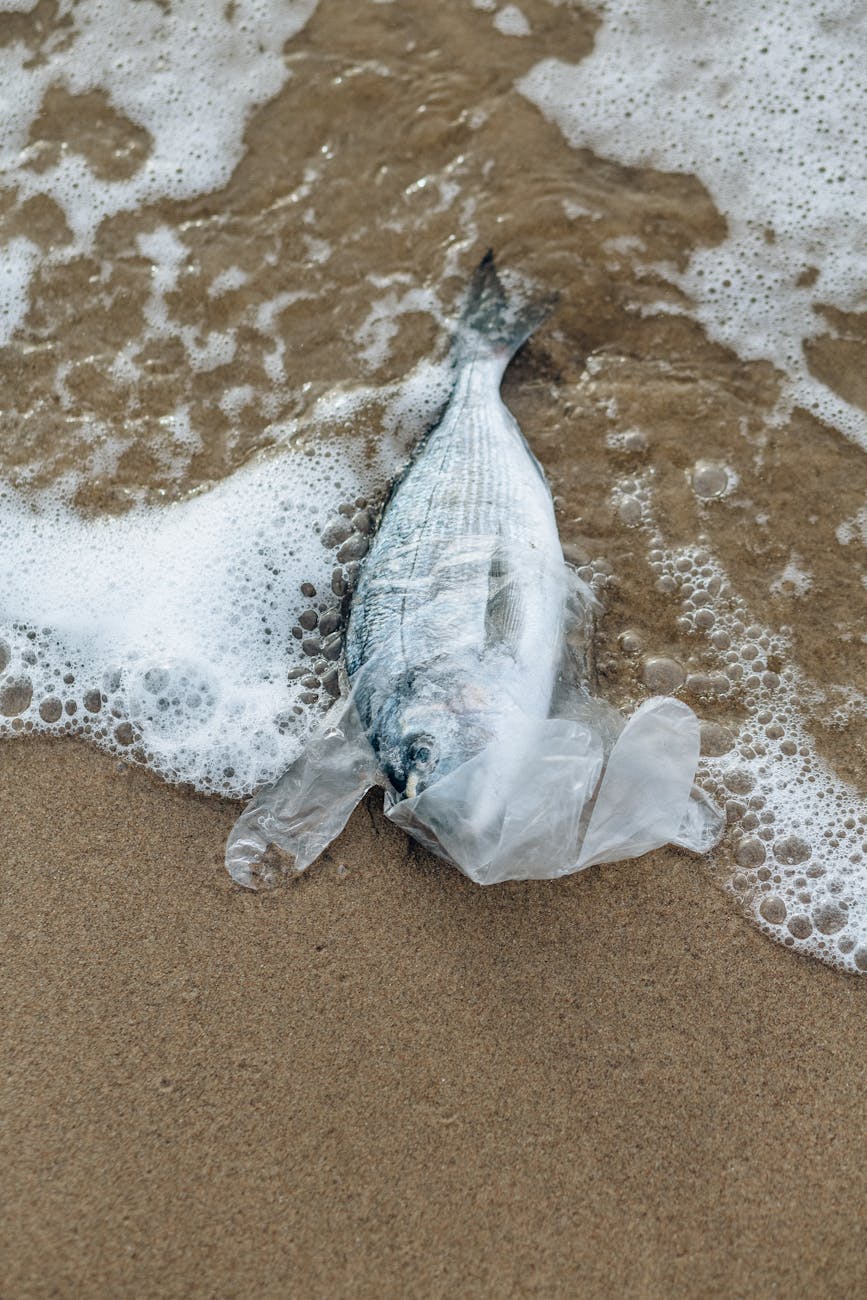
In a landmark move last month, the International Union for Conservation of Nature (IUCN) has officially recognised wild animals as essential allies for nature-based climate solutions. Thriving populations — from whales and fish that store carbon in the ocean to elephants and birds that regenerate forests — stabilise the planet’s systems.

This resolution sparks a significant turning point in international law, reframing wildlife not just passive victims of climate change, but as active participants, through seed dispersal, nutrient cycling, and ecosystem balance.


Source: Oceanographic Magazine

Buen Vivir connection: Affirms the interdependence of all life, recognising animals as holders of rights and co-creators of planetary balance.


Why it matters: Protecting animals becomes a pathway to restoring carbon cycles, regenerating ecosystems, and renewing our relationship with Earth.

3. Community-Led Ocean Protection Through Soft Law

Photo by Nataliya Vaitkevich on Pexels.com

Researchers at the University of Exeter show that voluntary, community-based agreements can outperform rigid regulations in protecting marine ecosystems. By respecting local autonomy and cultural context, communities sustain conservation more naturally.


Source: Oceanographic Magazine

Buen Vivir connection: Harmony through collaboration, not domination.


Why it matters: Empowering coastal communities affirms that ecological wisdom lies not only in science, but in the lived experience of those most connected to the sea.

4. Brazil: Forest Protection and Local Prosperity Intertwined

Photo by Bill Salazar on Pexels.com

At the Instituto Arapyaú, Renata Piazzon and partners are demonstrating that healthy forests and thriving local economies can coexist. Their projects link sustainable production, community wellbeing, and biodiversity.


Source: Mongabay – Brazil Can Protect Its Forests While Growing Its Economy

Buen Vivir connection: Mutual flourishing of people and ecosystems.


Why it matters: It shows how care for land and nature can generate enduring socio-eco wellbeing.

5. Boulder, Colorado: Urban Food Security Through Nature-Based Solutions

Photo by Simon Berger on Pexels.com

In Boulder, community members are collaborating with local Nature-Based Solutions teams to expand urban farms, restore pollinator corridors, and build climate resilience.
Source: City of Boulder

Buen Vivir connection: Food security re-roots the idea of nourishment in place, community, and reciprocity.


Why it matters: Demonstrates how cities can regenerate ecosystems while improving food access, transforming concrete into care.

A Reset for Unprecedented Times

Maria Zambrano* lives in the highlands of Ecuador’s Cotacachi Canton, home to two of the world’s 36 internationally recognized biodiversity hots pots. It is also home to a people fiercely committed to their own social and environmental well-being. Zambrano is an Indigenous Ecuadorian of the Kichwa people. Sitting at a café in Cotacachi, the seamstress is dressed in a black wrap-around skirt and a traditional embroidered white shirt, on which she’s done all the embroidery. The colorful stitching, she explains, is symbolic of her land, depictions of the connection between humans and Pachamama, which she uses to refer to Mother Earth. Pachamama, she says, is at the heart of everything she does.

Read more

Published in Yes! Magazine Winter 2020 https://www.yesmagazine.org/issue/what-the-rest-of-the-world-knows/2020/11/03/a-reset-for-unprecedented-times/

COVID-19 is the chance for a social and ecological reset….but, how? Part I

Support independent research

Become a monthly subscriber to get access to this and other content.

Subscribe to get access

Read more of this content when you subscribe today.

Celebrating Biodiversity, means Respecting Nature as Equal

Today, June 5, is World Environment Day. The theme for 2020 is “Celebrating Biodiversity”. What does that mean exactly?

Biodiversity is the complex web of more than 8 million species on this planet that are vital to our existence. One million of these plant and animal species is facing extinction if we don’t change our way of life.

Every species on the planet is important in maintaining healthy and balanced ecosystems. Every. Single. One.

Protecting this biodiversity is essential for our health, wellbeing, livelihoods, protection and security. We are part of nature. Our lives literally depend on it.

According to the IPBES, the five main drivers for biodiversity loss are: land use change; overexploitation of animals and plants; climate change; pollution; and, invasive species introduced through globalisation. These drivers are all human induced.

The UN says, “Nature is sending us a message: to care for ourselves we must care for nature. It’s time to wake up. To take notice…it’s time for nature”

Yes, it is time for nature. It is time then to start recognising and respecting that nature is not just a resource to be exploited exponentially for our own human wellbeing. There is a nature-society continuum at play. If we do not respect nature as equally as we respect ourselves, we throw out that delicate balance.

This is what we have been doing. One of the consequences is climate change and its related impacts.

In 2008, Ecuador made the historical decision to give Rights to Nature. This afforded a legal status to nature that recognised nature as an actor. The Rights of Nature has since resulted in a global movement to move away from the idea of nature as property under the law, towards a legal recognition that “nature in all its life forms has the right to exist, persist, maintain and regenerate its vital cycles.”

Affording nature rights, is more than just a legal protection, and it is certainly more than just a symbolic gesture. It is also a call for civilizational change. In Western society, we are all so used to seeing nature as a resource for our own good use, that we forget what might happen if it no longer exists.

This means that at a societal level, we also must recognise the wellbeing of nature as equally as our own, and change our habits, behaviours, attitudes and practices accordingly. After all, we need nature, more than it needs us. It is impossible to imagine life on earth without clean drinking water, land to cultivate and harvest food, trees for oxygen…

We just have to look at how nature has started to recover during COVID-19 lockdowns to be able to imagine how nature would do just fine without us.

As the UN also says, “it will take not just one, not just a village, but an entire global community to change this trajectory.” It involves rethinking our role on this planet and what we can do to ensure sustainable change.

Want to learn more? Here are some resources:

Earth School http://www.ted.ed.com/EarthSchool

Reduce plastic pollution http://www.cleanseas.org

Reduce your carbon footprint http://www.anatomyofaction.org

Reduce waste http://www.myzerowaste.com

Learn about the Rights of Nature http://www.rightsofnature.org