Good Planet News Weekly, 6 November

Edition: 6 November 2025
Theme: Respecting our Oceans, Restoring Balance, Regenerating Connection

Each of these stories embodies Buen Vivir: the understanding that socio-eco wellbeing arises when we live in harmony with all life. From Antarctic waters to the Amazong, people are re-imagining progress not as extraction, but as regeneration.

  1. UK Retailer Ends Krill Sales for Antarctic Conservation

Holland & Barrett, a major UK health retailer, has stopped selling krill-based supplements to protect the Southern Ocean ecosystem. The move supports marine biodiversity by reducing harvest pressure on krill — the foundation of the Antarctic food web.
Source: Sea Shepherd Global – Positive Waves October 2025

Buen Vivir connection: Recognising the rights of ocean life to flourish, not merely to serve human markets.


Why it matters: Small consumer-market shifts can ripple outward to protect critical species and foster corporate accountability grounded in ecological ethics.

2.  Wild Animals Officially Recognised as Critical Enablers of Climate Solutions

Photo by Pixabay on Pexels.com

In a landmark move last month, the International Union for Conservation of Nature (IUCN) has officially recognised wild animals as essential allies for nature-based climate solutions. Thriving populations — from whales and fish that store carbon in the ocean to elephants and birds that regenerate forests — stabilise the planet’s systems.

This resolution sparks a significant turning point in international law, reframing wildlife not just passive victims of climate change, but as active participants, through seed dispersal, nutrient cycling, and ecosystem balance.


Source: Oceanographic Magazine

Buen Vivir connection: Affirms the interdependence of all life, recognising animals as holders of rights and co-creators of planetary balance.


Why it matters: Protecting animals becomes a pathway to restoring carbon cycles, regenerating ecosystems, and renewing our relationship with Earth.

3. Community-Led Ocean Protection Through Soft Law

Photo by Nataliya Vaitkevich on Pexels.com

Researchers at the University of Exeter show that voluntary, community-based agreements can outperform rigid regulations in protecting marine ecosystems. By respecting local autonomy and cultural context, communities sustain conservation more naturally.


Source: Oceanographic Magazine

Buen Vivir connection: Harmony through collaboration, not domination.


Why it matters: Empowering coastal communities affirms that ecological wisdom lies not only in science, but in the lived experience of those most connected to the sea.

4. Brazil: Forest Protection and Local Prosperity Intertwined

Photo by Bill Salazar on Pexels.com

At the Instituto Arapyaú, Renata Piazzon and partners are demonstrating that healthy forests and thriving local economies can coexist. Their projects link sustainable production, community wellbeing, and biodiversity.


Source: Mongabay – Brazil Can Protect Its Forests While Growing Its Economy

Buen Vivir connection: Mutual flourishing of people and ecosystems.


Why it matters: It shows how care for land and nature can generate enduring socio-eco wellbeing.

5. Boulder, Colorado: Urban Food Security Through Nature-Based Solutions

Photo by Simon Berger on Pexels.com

In Boulder, community members are collaborating with local Nature-Based Solutions teams to expand urban farms, restore pollinator corridors, and build climate resilience.
Source: City of Boulder

Buen Vivir connection: Food security re-roots the idea of nourishment in place, community, and reciprocity.


Why it matters: Demonstrates how cities can regenerate ecosystems while improving food access, transforming concrete into care.

The Fight for Mother Ocean


The ocean, she breathes life into the earth, into you, into me. The ocean, this ultimate vessel for the ‘Elixir of Life’ unto which we are all ultimately connected, needs us so that she may continue to sustain us. You see, this vast blue and us, we are inextricably interconnected.

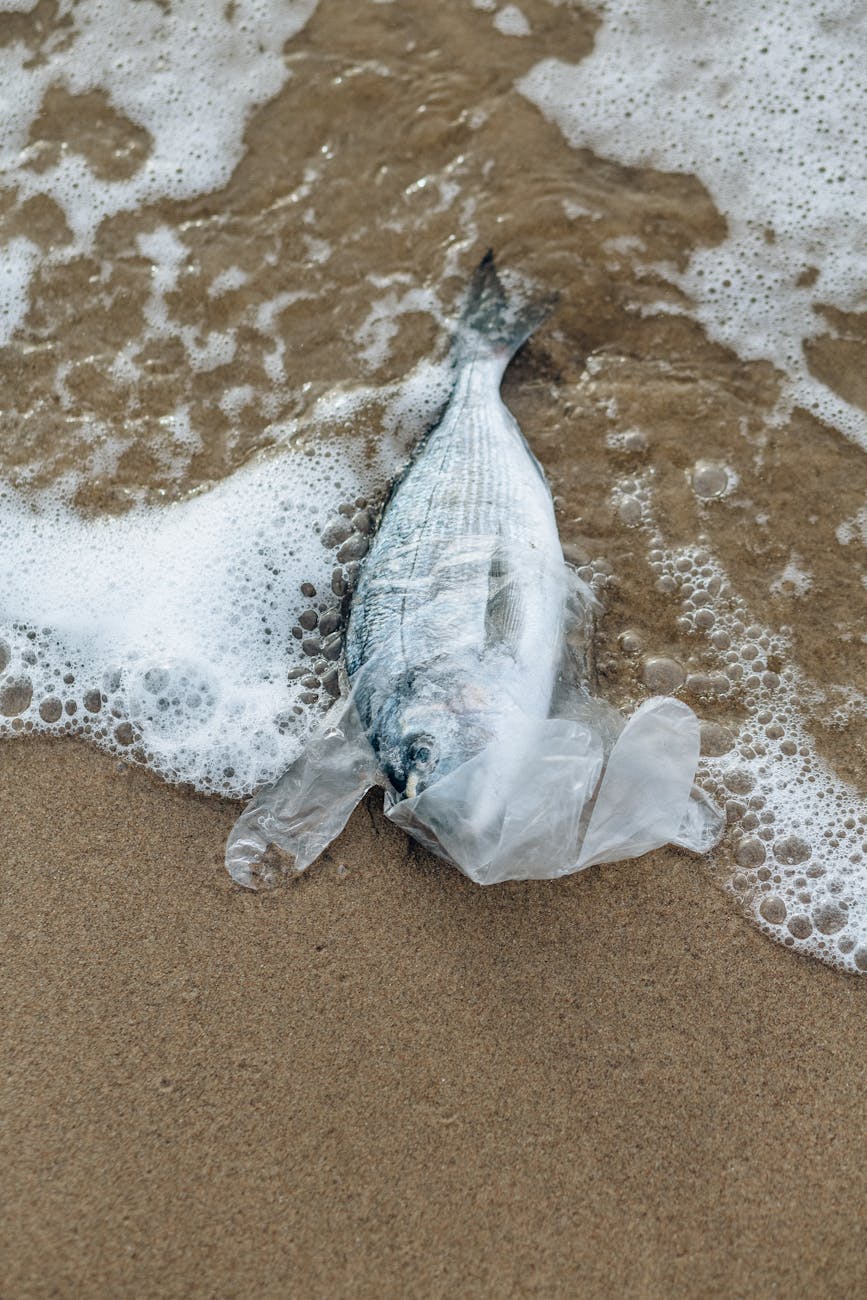
The ocean covers the majority of the planet – 97 percent, in fact. The world’s four major oceans are interconnected making the vast blue at one with the earth. This vast amount of liquid water is what makes our planet unique and the primary contributor to life on Earth. Yet, we have lost respect for her and her significance, polluting 88 percent of her surface with our debris, with the vast majority of it sinking to the bottom of our precious marine ecosystems.

The ocean began her life three billion years ago and we may never fully understand the mysteries that have evolved since then. She is wise this old girl. While the earth may not look the same, her duty to birth and sustain life has remained constant.

Never one to keep still, she is always in movement. In a tangled cycle of heat and vapour, the ocean gives herself to the atmosphere and disguises herself as bright clouds that give us shade from the scorching sun, and rain that waters our crops and provides us with water to drink. The ebbs and flows of the ocean current allow life everywhere across the globe to perpetuate, to flourish and to reproduce. The sea floor is locked in a perpetual cycle of birth and destruction that shapes our earth and even influences our DNA.

The Enlightenment assumption that natural resources were simply property to be exploited is naïvely nonsensical – if we deplete and destroy nature, we ultimately damage ourselves.  Our estuaries, salt marshes, mangrove forests, coral reefs, open and deep seas all depend on an ocean thriving and in good health.

For the world’s indigenous peoples, the ocean, like all forces of nature, is a living being, and must be respected, revered, and cared for. Beliefs anchor in facts: nature sustains us, guides us, gives us life and health. The ocean provides us with food, medicine, minerals, oxygen, and freshwater.

However, today we exercise our dominion over the sea and all of her creatures and organisms, and we are paying the price.

First civilizations had a transactional relationship with the ocean, riding the seas through ancient trade routes importing and exporting knowledge, tools, spices, minerals, and other riches, and expanding empires. The seas supported our livelihoods, helping society to become what it is today. Humanity has used the ocean against itself – the very reliance civilizations had on her for expansion and progress became the driving forces that are destroying her by impacting the earth’s climate.

In modern life, the threats of climate change and human destruction have forever changed the way our ocean and her ecosystems exist and evolve. Evolution is a slow process, usually, but with our consumerist and extractive mindsets we have taken so much of the earth’s riches and given it back in waste that it has caused mass extinctions in all life forms, not least in the ocean. If we continue the way we are, in the time to come all marine life from the deepest depths to the sandy shores could suffer one of the biggest mass extinctions in the history of our planet from warming seas and changing currents.

Our polar regions are warming faster than anywhere else on Earth. The Arctic Ocean once glistened with snow and ice under a pale sun, atop with glaciers so large that humans had little knowledge of what went on in life underneath. Now plankton, scores of fish, walruses, whales and seals all are fighting to adapt to warming seas. Polar bears that completely depend on the ocean to survive are drowning, and starving with nowhere to go. It is a case of fight or perish. Through our actions though, the ocean has little say in how she changes. The ice that once gleamed in varying hues of pale blue and white protecting her from above is giving way to deep blues. As the darkest depths of the ocean reveal themselves to our polar regions, so does our future become obscure.

We humans are so intelligent that we have long studied and understood geological processes of the past, yet we are so far inept at changing the forces that will stop it from happening again. We write the history books, what is stopping us from editing them to allow for a legacy sequel?  

The ocean is the most powerful force on earth – she is a mother, a killer, a healer, and a peacemaker – lest she have the power to rest in good health. As humans we have inherited the universal right to clean water because of its importance to sustaining life. Though, some interpret that as the right to exploit at all costs, that the ocean and its supported water forms are a commodity to fulfill our needs and desires first. As a living being, she deserves agency to pursue redress if it is damaged or destroyed.

The Rights of Nature is a movement that catalyzes the connection between us and the earth. The idea of giving rights to the ocean and all water sources is to protect them against destructive and exploitative human activity – that we may live in harmony with nature and not against it. It acknowledges the inherent intimate connection we have with her, how she has helped form this planet we call home, and that she may continue to endure and sustain us with her most important work flowing through life every day. It may reorient the way we live towards our responsibilities to nature. The ocean deserves her right to be recognised and respected.

If we retrieve reverence for our ocean, we can recover respect for ourselves and our future. Honouring the reciprocal relationship we have with Mother Ocean is key to hope for times to come.  While climate change is obscuring the outlook for the future state of our planet, one thing is certain: our ocean is worth fighting for.


Sustaining Water Wellbeing

Our blue planet is a testament to the integral role of water to every living being on earth. Access to water not only satisfies our basic needs but our psychological needs too.

Over the summer I may have been a little quiet as I took time with my family. A large part of wellbeing is taking time to connect with our families, and ourselves and for me, the school holiday period is a good time to do that. We spent a lot of time being by the water, whether that be the ocean or the rivulet. The ambiance of water – blue space – has therapeutic effects on human health and wellbeing. The time spent by water was a timely reminder that we are connected to the liquid stuff in more ways than we realise.

Our blue planet is a testament to the integral role of water to every living being on earth. Access to water not only satisfies our basic needs but our psychological needs too. Our need for water can be categorised by Manfreed Max-Neef’s nine axiological needs for Human-Scale Development, that is: subsistence, protection, participation, identity, idleness, creation, and even affection, understanding and freedom; but which also corresponds to Maslow’s psychological needs mirrored in his Hierarchy of Needs such as the need for leisure time, culture and community. Oftentimes, water is only equated to the need for subsistence or survival.

Water is a communal concept. The only thing individual about water is the way its presence makes us feel, subjectively. Yet, even that has objective consequences because, numerous studies show that being connected to nature, particularly water, makes people feel part of something bigger than themselves, imparting a feeling of awe and transcendence. This feeling of being connected to something bigger helps develop the responsibility to protect the environment around us.

Given the overwhelming importance of water to life on earth, the principle of reciprocity is especially crucial. In other words, being cognizant of the society-nature continuum and conscious of the fact that what we take, we must also give back. The Socio-Eco Wellbeing that results from Buen Vivir, confirms transcendent values like our deep connection to water, highlighting the importance not only of human wellbeing but also environmental wellbeing.

The United Nations resolution 64/292 calling for access to safe water to be considered as a human right was passed in 2010 with the support of 122 countries. It states that “the human right to water entitles everyone to sufficient, safe, acceptable, physically accessible and affordable water for personal and domestic uses.” (UN CESC – General Comment 15, paragraph 2).

Although no one can deny the necessity of water as human, and the need for everyone, everywhere to be able to access clean, safe water, it has been argued that making it a human right only reinforces the mentality of human’s dominance over nature – that we must control it as a means to ensuring our own survival and livelihood, cementing if you like, the idea of water being a commodity. It should not be.  Rather, it should be understood as an essential part of the earth’s lifecycle, of which we are also a part.

Our modern-day commodity-like dependence on water leads to pollution, drought, water scarcity, and consequently diseases and food insecurity. Notwithstanding our absolute need for clean, fresh water; shifting mindsets from water as a human right to the responsibility of humans to ensure the health and sustainability of water sources can help ensure the former. Of course, this would not be equitable without re-examining the structural causes as to why many communities go without safe drinking water, and sacred water environments destroyed, polluted, or even seized.

In neoliberal development, human rights and environmental protection are often in conflict with each other. In 2010, the United Nations Human Rights Council affirmed that the human right to water is legally binding upon states. To guarantee water as a human right means first addressing the structural and systemic road bumps that see the misuse, overuse, and exploitation of water and water sources. A large part of this is due to industry consumption. Particularly in communities in the Global South which have had multinationals and/or governments misuse and pollute local water sources for production’s sake. Watercourses are protected internationally by the “no-harm” principle in international law. That may help with seeking reparations,  but there is nothing concrete to prevent harm being done in the first place.

Harms to water sources create water stress, not only for humans but also for all living ecosystems that rely upon water for survival. The consequences are dire and cyclical. It affects food systems, livelihoods, even reactional activities. In short, it affects both human and ecological wellbeing and threatens our ability to satisfy both basic and psychological needs.

So, let’s put a spin on this. If we viewed water not as a right, but as a guarantor of both human and ecological wellbeing that must be protected and cared for to be utilized, would that change anything? Should it then not just be a question of society’s needs, but environmental ones too? The first step might be to also ask: what does water need to ensure its continual and safe replenishment?

Personifying ecological resources, for example, is a practice and worldview taken by Indigenous Peoples for generations, and it may help better ensure sustainability by changing the way we look at our natural resources. This practice has been ratified in law in a handful of cases where local jurisdictions uphold the Rights of the Nature, such as the constitutional amendments in Ecuador which recognise such rights, or the treaty ratified in New Zealand with the Māori iwi recognising the Whanganui River as a legal entity.

Complementing the right of water should therefore be the application of environmental personhood – providing water itself rights to exist and survive in good health. These two ideas need to harmonize each other because, without water, there is no life – human or otherwise. On the contrary, without humans, water will continue to flow and perhaps thrive, without the threats of overuse and pollution. Unfortunately, we humans cannot say the same about water.

A Reset for Unprecedented Times

Maria Zambrano* lives in the highlands of Ecuador’s Cotacachi Canton, home to two of the world’s 36 internationally recognized biodiversity hots pots. It is also home to a people fiercely committed to their own social and environmental well-being. Zambrano is an Indigenous Ecuadorian of the Kichwa people. Sitting at a café in Cotacachi, the seamstress is dressed in a black wrap-around skirt and a traditional embroidered white shirt, on which she’s done all the embroidery. The colorful stitching, she explains, is symbolic of her land, depictions of the connection between humans and Pachamama, which she uses to refer to Mother Earth. Pachamama, she says, is at the heart of everything she does.

Read more

Published in Yes! Magazine Winter 2020 https://www.yesmagazine.org/issue/what-the-rest-of-the-world-knows/2020/11/03/a-reset-for-unprecedented-times/

Optimism, Hope and Respect in a Changing Climate

Photo by Akil Mazumder on Pexels.com

It is no secret that the term climate change is the source of a great deal of anxiety in people of all ages these days – even more so amongst those who are starting to feel its effects. The term ‘eco-anxiety’ has been coined by psychologists to deal with this relatively new phenomenon.

Climate change is indeed having direct and indirect effects on our health, including our mental health. Many young people are facing feelings of “existential dread” about what their future holds. Despite the rise in climate pessimism, there are reasons to be (cautiously) optimistic. The Climate Reality Project discusses 9 of them here.

To ride that momentum, in this post, I’d like to reframe the discussion today and talk about ‘hope’, ‘optimism’, and, most of all, ‘respect’.

Let’s start with this idea of the ‘environment’. The term can be argued as being contested. It means different things to different cultures. Unfortunately, in the West we separate human life from the natural environment, but not without consequence.

To many Indigenous cultures around the world, the environment is not a separate entity, it is an all-encompassing connection to a personified ‘Mother Earth’. It demands respect. Regardless of your spiritual beliefs, by personifying the natural environment, or even just seeing it as something other than an inanimate resource to exploit – a holder of rights – then we automatically begin to pay more respect to it and the richness it provides human life. After all, most people would hardly disrespect, abuse, and exploit their own mother! It is a question of paying full respect to that which sustains life.

When we reframe the natural environment in such a way, it is less daunting to approach a changing climate with a sense of reality.

Nonetheless, it is easy to be pessimistic about climate change when we see the scientific data and understand the current planetary trajectory. A certain amount of fear is necessary to emphasize the urgency of the situation. The problem is, that climate pessimism often leads to feelings of hopelessness, sometimes denial, and ultimately inaction. But, what happens when we start looking at things a little differently, and open our eyes to the pockets of good things that are happening globally to combat climate change – in our communities, cities, private enterprise, associations, research, policy, and technology? We only have to look at the way the environment is embraced by other cultures around the world to restore some optimism in humanity.

A shift in mindset sows seeds of cautious optimism that can spur on lasting and effective climate action where we can all contribute to these pockets of good things until climate action is no longer revolutionary, but the norm. To change our mindsets though, we need a certain dose of hope.

So, let us talk about hope for a moment. What is the opposite of hope? It is despair. Often despair leads to feelings of guilt. As Paul Goodman once said, “No good has ever come from feeling guilty, neither intelligence, policy, nor compassion. The guilty do not pay attention to the object but only to themselves, and not even to their own interests, which might make sense, but to their anxieties.” Hence the rise in eco-anxiety.

I have just started reading Jonathan Porritt’s ‘Hope in Hell: a decade to Confront the Climate Emergency’. As a mother of two children, working on climate, sustainability, and wellbeing from a social and policy perspective, I need to entertain feelings of hope, otherwise, what am I doing? So, the title of this book drew me in immediately. I have read too little of this book to give a review, but this focus on reality mixed with hope and optimism is the angle we all should be taking right now.

Porritt opens his book with a quote from Rebecca Solnit, fitting for climate action:

“Hope is an embrace of the unknown and unknowable, an alternative to the certainty of both optimists and pessimists.”

To a certain degree, the precautionary principle in international environmental law is caught up in a force of hope. Solnit continues,

“It’s the belief that what we do matters, even though how and when it may matter, who and what it may impact, are not things we can know beforehand.”

Rebecca Solnit

We can no longer take a gamble with decisions and behaviours, all precaution is needed. Even if we don’t know why beforehand. In fact, precaution doesn’t go far enough. But hope does. Hope inspires people to understand that what they do matters. The actions they take in their personal, professional, and political lives can contribute to real transformative change.

A sustainable future needs hope in transformative change, with a dose of optimism to believe that action can lead to change. Add an understanding of reality and respect for the natural environment. As Greta Thunberg says “Act like your house is on fire. Because it is!” Only, guard hope that not all is lost.

Much attention is paid to the inaction of policymakers to enact effective climate policies. We must not forget though, the burden of climate passivists, those who believe that someone else will take care of things. Both “shiny optimists” as Porritt calls them, and pessimists can fall into that camp. Much lasting change is achieved from the bottom. Social movements and behavioural change have achieved great things in the past century.

So, let’s guard some hope, regard good climate action in all corners of society with a healthy sense of optimism, and embrace nature not as a resource to exploit exponentially, but with full respect for the way it sustains life on earth.

Celebrating Biodiversity, means Respecting Nature as Equal

Today, June 5, is World Environment Day. The theme for 2020 is “Celebrating Biodiversity”. What does that mean exactly?

Biodiversity is the complex web of more than 8 million species on this planet that are vital to our existence. One million of these plant and animal species is facing extinction if we don’t change our way of life.

Every species on the planet is important in maintaining healthy and balanced ecosystems. Every. Single. One.

Protecting this biodiversity is essential for our health, wellbeing, livelihoods, protection and security. We are part of nature. Our lives literally depend on it.

According to the IPBES, the five main drivers for biodiversity loss are: land use change; overexploitation of animals and plants; climate change; pollution; and, invasive species introduced through globalisation. These drivers are all human induced.

The UN says, “Nature is sending us a message: to care for ourselves we must care for nature. It’s time to wake up. To take notice…it’s time for nature”

Yes, it is time for nature. It is time then to start recognising and respecting that nature is not just a resource to be exploited exponentially for our own human wellbeing. There is a nature-society continuum at play. If we do not respect nature as equally as we respect ourselves, we throw out that delicate balance.

This is what we have been doing. One of the consequences is climate change and its related impacts.

In 2008, Ecuador made the historical decision to give Rights to Nature. This afforded a legal status to nature that recognised nature as an actor. The Rights of Nature has since resulted in a global movement to move away from the idea of nature as property under the law, towards a legal recognition that “nature in all its life forms has the right to exist, persist, maintain and regenerate its vital cycles.”

Affording nature rights, is more than just a legal protection, and it is certainly more than just a symbolic gesture. It is also a call for civilizational change. In Western society, we are all so used to seeing nature as a resource for our own good use, that we forget what might happen if it no longer exists.

This means that at a societal level, we also must recognise the wellbeing of nature as equally as our own, and change our habits, behaviours, attitudes and practices accordingly. After all, we need nature, more than it needs us. It is impossible to imagine life on earth without clean drinking water, land to cultivate and harvest food, trees for oxygen…

We just have to look at how nature has started to recover during COVID-19 lockdowns to be able to imagine how nature would do just fine without us.

As the UN also says, “it will take not just one, not just a village, but an entire global community to change this trajectory.” It involves rethinking our role on this planet and what we can do to ensure sustainable change.

Want to learn more? Here are some resources:

Earth School http://www.ted.ed.com/EarthSchool

Reduce plastic pollution http://www.cleanseas.org

Reduce your carbon footprint http://www.anatomyofaction.org

Reduce waste http://www.myzerowaste.com

Learn about the Rights of Nature http://www.rightsofnature.org