Maria Zambrano* lives in the highlands of Ecuador’s Cotacachi Canton, home to two of the world’s 36 internationally recognized biodiversity hots pots. It is also home to a people fiercely committed to their own social and environmental well-being. Zambrano is an Indigenous Ecuadorian of the Kichwa people. Sitting at a café in Cotacachi, the seamstress is dressed in a black wrap-around skirt and a traditional embroidered white shirt, on which she’s done all the embroidery. The colorful stitching, she explains, is symbolic of her land, depictions of the connection between humans and Pachamama, which she uses to refer to Mother Earth. Pachamama, she says, is at the heart of everything she does.
It is no secret that the term climate change is the source of a great deal of anxiety in people of all ages these days – even more so amongst those who are starting to feel its effects. The term ‘eco-anxiety’ has been coined by psychologists to deal with this relatively new phenomenon.
Climate change is indeed having direct and indirect effects on our health, including our mental health. Many young people are facing feelings of “existential dread” about what their future holds. Despite the rise in climate pessimism, there are reasons to be (cautiously) optimistic. The Climate Reality Project discusses 9 of them here.
To ride that momentum, in this post, I’d like to reframe the discussion today and talk about ‘hope’, ‘optimism’, and, most of all, ‘respect’.
Let’s start with this idea of the ‘environment’. The term can be argued as being contested. It means different things to different cultures. Unfortunately, in the West we separate human life from the natural environment, but not without consequence.
To many Indigenous cultures around the world, the environment is not a separate entity, it is an all-encompassing connection to a personified ‘Mother Earth’. It demands respect. Regardless of your spiritual beliefs, by personifying the natural environment, or even just seeing it as something other than an inanimate resource to exploit – a holder of rights – then we automatically begin to pay more respect to it and the richness it provides human life. After all, most people would hardly disrespect, abuse, and exploit their own mother! It is a question of paying full respect to that which sustains life.
When we reframe the natural environment in such a way, it is less daunting to approach a changing climate with a sense of reality.
Nonetheless, it is easy to be pessimistic about climate change when we see the scientific data and understand the current planetary trajectory. A certain amount of fear is necessary to emphasize the urgency of the situation. The problem is, that climate pessimism often leads to feelings of hopelessness, sometimes denial, and ultimately inaction. But, what happens when we start looking at things a little differently, and open our eyes to the pockets of good things that are happening globally to combat climate change – in our communities, cities, private enterprise, associations, research, policy, and technology? We only have to look at the way the environment is embraced by other cultures around the world to restore some optimism in humanity.
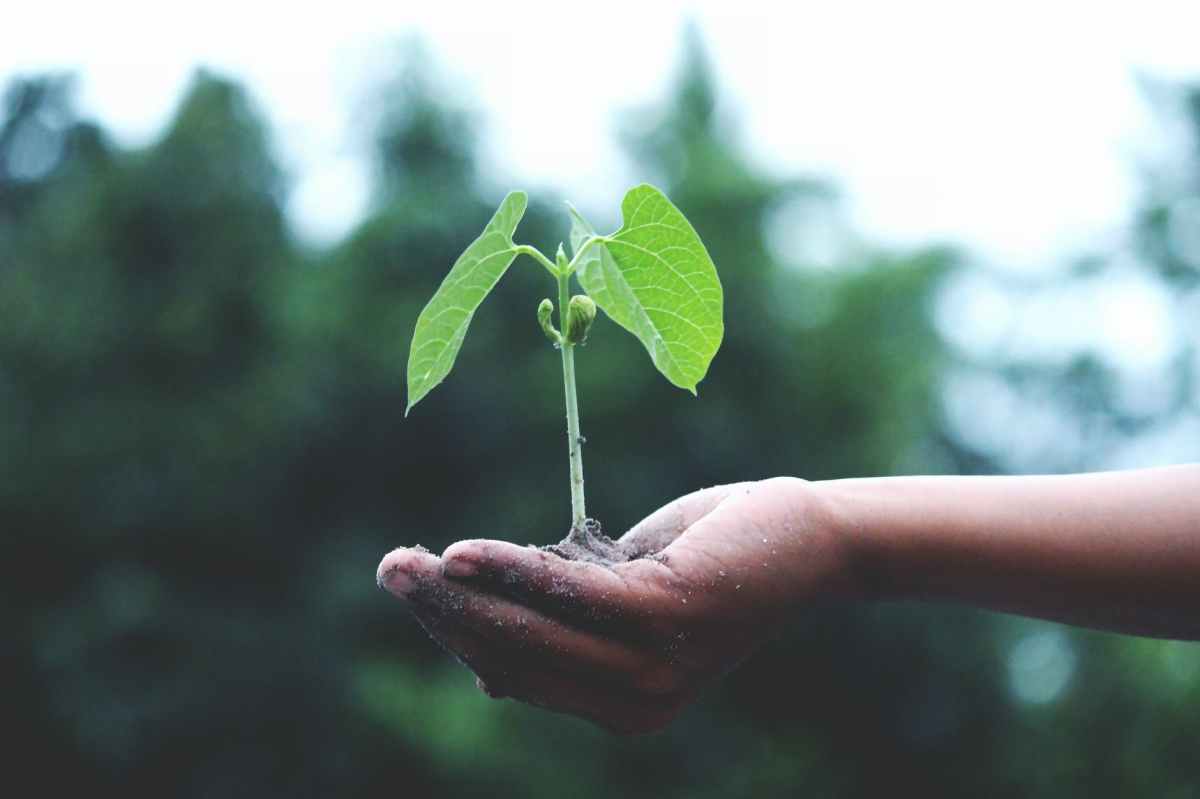
A shift in mindset sows seeds of cautious optimism that can spur on lasting and effective climate action where we can all contribute to these pockets of good things until climate action is no longer revolutionary, but the norm. To change our mindsets though, we need a certain dose of hope.
So, let us talk about hope for a moment. What is the opposite of hope? It is despair. Often despair leads to feelings of guilt. As Paul Goodman once said, “No good has ever come from feeling guilty, neither intelligence, policy, nor compassion. The guilty do not pay attention to the object but only to themselves, and not even to their own interests, which might make sense, but to their anxieties.” Hence the rise in eco-anxiety.
I have just started reading Jonathan Porritt’s ‘Hope in Hell: a decade to Confront the Climate Emergency’. As a mother of two children, working on climate, sustainability, and wellbeing from a social and policy perspective, I need to entertain feelings of hope, otherwise, what am I doing? So, the title of this book drew me in immediately. I have read too little of this book to give a review, but this focus on reality mixed with hope and optimism is the angle we all should be taking right now.
Porritt opens his book with a quote from Rebecca Solnit, fitting for climate action:
“Hope is an embrace of the unknown and unknowable, an alternative to the certainty of both optimists and pessimists.”
To a certain degree, the precautionary principle in international environmental law is caught up in a force of hope. Solnit continues,
“It’s the belief that what we do matters, even though how and when it may matter, who and what it may impact, are not things we can know beforehand.”
Rebecca Solnit
We can no longer take a gamble with decisions and behaviours, all precaution is needed. Even if we don’t know why beforehand. In fact, precaution doesn’t go far enough. But hope does. Hope inspires people to understand that what they do matters. The actions they take in their personal, professional, and political lives can contribute to real transformative change.
A sustainable future needs hope in transformative change, with a dose of optimism to believe that action can lead to change. Add an understanding of reality and respect for the natural environment. As Greta Thunberg says “Act like your house is on fire. Because it is!” Only, guard hope that not all is lost.
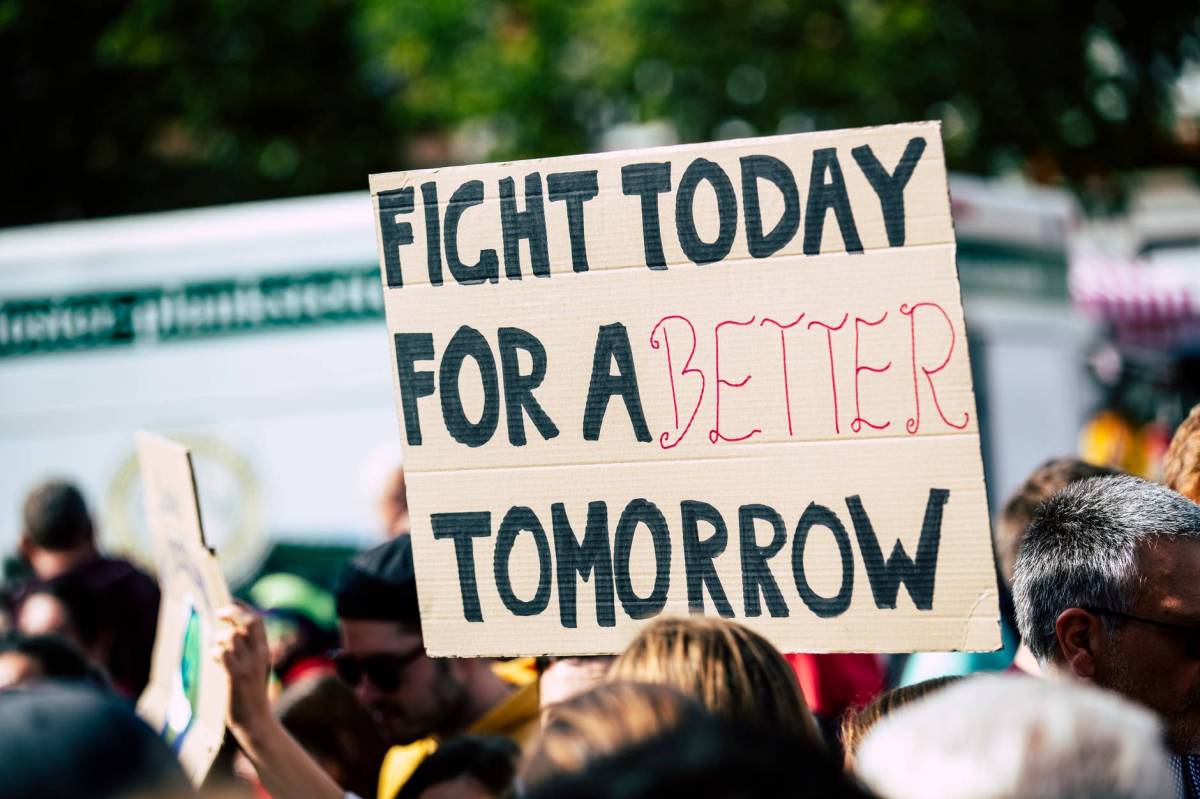
Much attention is paid to the inaction of policymakers to enact effective climate policies. We must not forget though, the burden of climate passivists, those who believe that someone else will take care of things. Both “shiny optimists” as Porritt calls them, and pessimists can fall into that camp. Much lasting change is achieved from the bottom. Social movements and behavioural change have achieved great things in the past century.
So, let’s guard some hope, regard good climate action in all corners of society with a healthy sense of optimism, and embrace nature not as a resource to exploit exponentially, but with full respect for the way it sustains life on earth.
I have been a bit quiet on social media and the blog lately. Now it’s time for a brief update. I ticked off some professional milestones, so I have taken a short break to refuel. You might call it ‘self-mastery’. Self-mastery is vital for human and environmental wellbeing. It helps you create space for the things that matter: for the relationships in your life, solitude, gratitude, happiness, family, and the natural environment.
The human race has spent such a phenomenal amount of energy demonstrating its mastery of nature that it has led not only to an environmental crisis, but also to a blurring of the lines between the superficial and the necessary.
Now more than ever we need a vision for the future of humanity and the planet. We need to chase that vision with fervour. We need to master ourselves, focus on what we actually need, and strengthen the connection with nature, not destroy it chasing the dollar bill.
We need to let transcendence guide our daily choices, with an understanding that there is something more than individual desires. And only then will we truly be able to tackle climate change, environmental destruction and social injustices.
The Black Lives Matter movement in the wake of the killing of George Floyd by a police officer in the United States has awakened broader challenges to the current state of race relations – in particular in connection to environmentalism and climate change.
Like COVID19 and climate change, these too are intersecting crises that need to be dealt with concurrently and with urgency.
Within the race debate is a larger one of decolonising environmental and climate action – that is, moving the conversation away from predominantly white Western perspectives of how we should handle climate change and ecological sustainability, and listening to other voices and perspectives. No, not just listening in fact, we need to incorporate them and bringing them greater equality in the process.
Since the beginning of the industrial revolution, poor, non-white populations have been bearing the heavy brunt of the decisions made predominantly for Western colonial interests. They have benefited little to none from the policies of development that have sent our world into a downward climatic spiral. In fact, they have led to greater inequalities for Indigenous and non-white, primarily economically poorer populations of the Global South.
But the decolonisation of the environmental movement doesn’t end there. Away from the Global South, in the United States and the UK – two countries with tense race relations – race and class determine who suffers the most from the impacts of climate change and environmental destruction because of social and economic inequalities. It is not just about environmental protection, it is also about equity in access to a healthy environment, clean water and air, arable and unpolluted land.
The tensions between environmentalism and racial and ethnic justice are not new. However, the recent global uprisings against racial injustice in line with the Black Lives Matter movement have highlighted how these issues are intertwined with environmental injustices – not just in the United States, but worldwide.
Historically non-white, non-Western countries and peoples have been subjected to exploitation for the sake of Western-led development. They have been locked into inequitable and pretty much unilateral systems of resource flows, which have seen Western colonising countries enter lands foreign to them and pillage them for their precious resources which were (and still very much are) exported to countries in the Global North for their own economic development and wealth accumulation.
While many countries have theoretically been ‘decolonised’, that does not transpire into practice. The reality is that this inequitable system of resource extraction still exists today for the interests of Western development. These large-scale extractive industries have been the major driver of climate change. When the world began to realise this, Sustainable Development was introduced in an attempt to ‘green’ economic growth.
The Western neoliberal movement for Sustainable Development has done nothing substantial to ensure us a sustainable future with a healthy planet and healthy, harmonious and just communities. Development and its derivatives have, time and time again, been called a failure.
Western countries have hailed Sustainable Development for its universality – that is, being applicable to everyone, everywhere, regardless of their geographical, cultural or economic circumstances, or realities. The idea is to bring all societies up to Western standards of living, while addressing the environment.
This ‘single story’ of Sustainable Development is what we have to change if we are to successfully tackle climate change through sustainability.
Everything that is happening globally right now, from coronavirus, social inequalities, failures of health and political systems, systemic racism and the climate emergency, it is time to change the course of our human and ecological trajectory.
There is an impetus for change that we can no longer call radical, but instead it should be viewed as reasonable, logical, and most of all imperative.
Sustainability is about the emergence of multiple stories, within which the histories, situations and realities of Indigenous, Native, Aboriginal and Torres Strait Islander, African, African-American, Asian, Hispanic, Maori, Masai, Bedouin, Arabic, Kurdish, Pacific Islander Peoples and all other non-Western peoples should not only have their stories heard, but also be part of the unfolding of the next generation of multiple stories. They also need to be respected. This means doing sustainability differently.
So what is one vision of what might this look like? My expertise as you are probably aware is in incorporating Buen Vivir into action for social and environmental wellbeing through a practical tool for change. This moves the debate away from the Western perspective to something practical that passes the baton of social and environmental justice to others in a sort of decolonisation of the environmental and social systems.
Although Buen Vivir originates in the Andes, and with Indigenous roots, it is far from being implementable only in Latin America. Its core premises transcend cultural and geographic boundaries, to be something that speaks to the good of all humankind and the planet we reside on. They are present in many different cultures around the world (particularly Indigenous) whose voices have been muted by those of Western development.
Buen Vivir doesn’t return to a pre-modern past, but rather embeds itself in different ways of living, different practices and viewing the world. These variances come together under a set of common core principles – not a prescriptive or rigid way of doing things, but rather as guidance. It incorporates others’ knowledge including technical and scientific in the ways that we can look after the environment and people.
It is about listening to all the multiple stories and letting those people determine their own path to sustainability and wellbeing. It is also about not letting outsiders determine that for them, or devaluing the lives and realities of others who might not conform to a certain economic, race, class or social status determined by Western developmental standards. Lastly, it is about equity in ensuring a healthy environment and healthy communities.
Watch Novelist Chimamanda Adichie speaks of ‘the danger of the single story’ in her iconic TED talk. We can apply these lessons to the way we approach environmentalism and sustainability. As she says, “it makes our definition of equal humanity different”, she says. “It is a story of power”, of whose story is told, of who gets to determine the plot and ending of the story.
If you were to ask a classroom full of children to draw a picture for an environmental cause of any kind – whether it’s climate change or pollution or even littering – many of them will draw something that includes a blue globe with green continents on it. Or some green blobs roughly approximating the […]
I am honoured to be a panellist in The Conversation’s online event on July 2, with infectious disease and environmental health experts Dr Jean-François Guégan (Director of Research at the Institute of Research for Development, France), Fiona Armstrong (Executive Director and Founder of Climate and Health Alliance). Join us as we discuss why, for humans to survive, it is critical to connect human health, civilisation and the natural systems on which we depend. Facilitated by Misha Ketchell, Editor at The Conversation.
The COVID-19 crisis and the climate and biodiversity crises are deeply connected. All animals harbour viruses and other pathogens, and when environmental pressures force them into contact with humans, the results can be catastrophic. Environmental damage can also make humans more susceptible to the effects of infectious diseases.
Tasmania has some of the world’s most pristine beaches, but like all coastal regions they are subject to the ebb and flow of the tide, which often brings with it plastic debris and other garbage that has floated out to sea.
Yesterday I was walking at one rather secluded beach in Hobart’s east when I spotted a bright pink balloon complete with plastic ribbon entangled in a bush offshore. It had obviously floated there from a nearby party as it was still inflated.
What would happen if that party balloon made its way out into the ocean? Well, according to the CSIRO balloons are the “marine debris item that has the highest chance of killing seabirds if eaten, and 43 percent of short-tailed shearwaters have plastic in their gut.” What’s more, the CSIRO predicts that 95 percent of all seabird species may be ingesting plastic by 2050.
The Tasman Sea is a global hotspot for impacts of marine debris on seabirds.
This is not news, however. I’m sure you have heard about the major issues plastic and other debris cause to our marine life and coastal habitats. Yet, it continues to be a problem, as I witnessed yesterday.
What can we do about it? One effective way to tackle plastics debris in our oceans is to curb and eventually stop plastic use. This is dependant on a lot of factors including effective policy, education, and waste management. However, people’s attitudes and behaviours are the most important because mindful consumption of resources will lead to a plastic-free, and more ecologically sustainable society.
In the meantime, when looking for balloons for the next birthday party, Sustainability Victoria has put together a shortlist of some wildlife-friendly balloon alternatives, which includes bubbles for the kids, and flowers, which can be rehomed for decoration and then composted.
Changing habits is about keeping in the forefront of our minds, the impacts we have on our environment with our daily actions and decisions, and changing those accordingly.
It involves society as a whole rethinking our role in nature, so that we may effectively lessen our ecological impacts.
After all, these impacts are cyclical. Microplastics, plastic debris, and other contaminants are making their way into the food chain, and therefore having wide-ranging impacts on human health.
UPDATE: Website Balloons Blow (nothing to do with this article or its title) is a great resource for the impacts of balloons on wildlife, including education resources and a fantastic list of alternatives https://balloonsblow.org/environmentally-friendly-alternatives/






 natashachassagne.com