It’s easy to get caught up in the world that was in 2025. This year has been fraught with catastrophe, war, climate disaster, and conflict. It’s even more important now to reflect on the positive developments for our planet and our communities in the past 12 months. This 2025 wrap-up doesn’t bring you individual news stories, but several round-ups of good planet news stories for 2025.
1) Conservation Wins: WWF Highlights Global Progress
What happened: A year-end review from WWF highlights major conservation successes in forests, seas, and freshwater ecosystems. It also showcases achievements in species protection. The review demonstrates collective gains from restoration and stewardship.
Why it’s hopeful: Stories like restored habitats and species thriving offer hope that long-term conservation efforts do pay off when communities and scientists work together.
2) Positive Environmental Stories from Around the World
What happened: A curated roundup of uplifting environmental developments. This includes renewable tech innovations and remarkable biodiversity news. This proves that positive change is happening globally.
Why it’s hopeful: Seeing diverse and creative solutions and wins across sectors is encouraging. It reinforces that progress isn’t one-dimensional. People everywhere are contributing to it.
What happened: The Antarctic hole is shrinking. Green turtles have reversed their extinct status. These are some of the positive science and climate stories highlighted by Time magazine from 2025. These stories spotlight breakthroughs and nature recovery updates. They also showcase innovation that provides reasons for optimism.
Why it’s hopeful: The power of the narrative. Coverage from a major global outlet helps bring positive momentum to the mainstream narrative. This balances distressing climate coverage with tangible progress.
What happened: The Week outlined key environmental and climate science breakthroughs in 2025. These included advances in carbon tracking, green materials, energy tech, and ecosystem monitoring.
Why it’s hopeful: Technical innovation supports renewable energy and ecosystem resilience. It fuels long-term solutions beyond policy alone.
5) Historic Clean Energy Milestone: Renewables Outpace Coal
What happened: For the first time in history, renewable energy (mainly solar and wind) produced more electricity globally than coal in 2025. This event marked a symbolic and systemic shift in the global power mix.
Why it’s a big climate story: It’s a measurable global shift in how we power the world. This change is driven by technology, markets, and massive deployment of clean energy. It signals that in the energy system where most carbon comes from, cleaner sources are now leading. Read the full story:Reuters
Hope, Connection & Climate Progress
From biodiversity rebounds to world-wide clean energy milestones, 2025 was a year of interdependence, regeneration, and shared purpose:
Nature heals when nurtured: Conservation milestones and biodiversity gains remind us that ecosystems can rebound when humans partner with nature.
Clean technology becomes common ground: Breakthroughs and energy shifts aren’t just technical; they represent communities moving toward shared prosperity and ecological stewardship.
Hope is collective: These stories highlight that meaningful climate progress is not isolated. It emerges from scientists, activists, local organisers, engineers, and everyday people working together.
Each of these stories embodies Buen Vivir: the understanding that socio-eco wellbeing arises when we live in harmony with all life. From Antarctic waters to the Amazong, people are re-imagining progress not as extraction, but as regeneration.
UK Retailer Ends Krill Sales for Antarctic Conservation
Holland & Barrett, a major UK health retailer, has stopped selling krill-based supplements to protect the Southern Ocean ecosystem. The move supports marine biodiversity by reducing harvest pressure on krill — the foundation of the Antarctic food web. Source:Sea Shepherd Global – Positive Waves October 2025
Buen Vivir connection: Recognising the rights of ocean life to flourish, not merely to serve human markets.
Why it matters: Small consumer-market shifts can ripple outward to protect critical species and foster corporate accountability grounded in ecological ethics.
2. Wild Animals Officially Recognised as Critical Enablers of Climate Solutions
In a landmark move last month, the International Union for Conservation of Nature (IUCN) has officially recognised wild animals as essential allies for nature-based climate solutions. Thriving populations — from whales and fish that store carbon in the ocean to elephants and birds that regenerate forests — stabilise the planet’s systems.
This resolution sparks a significant turning point in international law, reframing wildlife not just passive victims of climate change, but as active participants, through seed dispersal, nutrient cycling, and ecosystem balance.
Researchers at the University of Exeter show that voluntary, community-based agreements can outperform rigid regulations in protecting marine ecosystems. By respecting local autonomy and cultural context, communities sustain conservation more naturally.
Buen Vivir connection: Harmony through collaboration, not domination.
Why it matters: Empowering coastal communities affirms that ecological wisdom lies not only in science, but in the lived experience of those most connected to the sea.
4. Brazil: Forest Protection and Local Prosperity Intertwined
At the Instituto Arapyaú, Renata Piazzon and partners are demonstrating that healthy forests and thriving local economies can coexist. Their projects link sustainable production, community wellbeing, and biodiversity.
In Boulder, community members are collaborating with local Nature-Based Solutions teams to expand urban farms, restore pollinator corridors, and build climate resilience. Source:City of Boulder
Buen Vivir connection: Food security re-roots the idea of nourishment in place, community, and reciprocity.
Why it matters: Demonstrates how cities can regenerate ecosystems while improving food access, transforming concrete into care.
This week’s good news round-up on September 25, 2025, “Buen Vivir in Action” highlights global community projects promoting ecological balance and reciprocity. From Kolkata’s heritage restoration to Cuba’s microgreen initiative, these stories illustrate efforts in sustainability, cultural identity, and community resilience across diverse locales, emphasizing the vital connection between human dignity and ecological wellbeing.
Date: Thursday, September 25, 2025
Buen Vivir in Action — Community, Reciprocity, and Ecological Balance
No news is good news – besides this good news round-up bringing you a dose of positivity and hope.
Buen Vivir reminds us that ecological wellbeing and human dignity are inseparable. This week’s stories show how communities in all parts of the globe are co-creating futures of reciprocity and resilience, from Havana rooftops to Thai lakes, Australian bushlands to PNG rainforests
Community donations light up Raj Bhavan, St. Paul’s Cathedral, and more, sparking civic pride and ecological urban renewal. 🔗 Read more →
Buen Vivir principles: Community-led, cultural identity, reciprocity with place. Why it matters: Heritage revival enhances urban ecological identity, strengthens community pride, and fosters stewardship of public spaces.
Photo: Times of India
2. Cuba’s Microgreen Revolution
A Havana start-up grows nutritious microgreens in shipping containers, training neighbors and creating new food pathways. 🔗 Read more →
Buen Vivir princples: Food sovereignty, endogenous innovation, holistic wellbeing. Why it matters: In crisis, communities can seed local resilience — nutritious food, livelihoods, dignity.
3. April Salumei Rainforest Conservation (Papua New Guinea)
An innovative new five-year Sustainable Development Plan for the April Salumei Rainforest Community Conservation Project in Papua New Guinea has been developed to provide long-term community benefits. 600,000 hectares of rainforest preserved by landowner-driven conservation and sustainable development planning. 🔗 Read more →
Buen Vivir principles: Holistic rights, ecological reciprocity, plural context. Why it matters: Avoids 22.8 million tonnes of CO₂, preserves habitat, and strengthens community voice in global climate finance.
4. Indigenous Fire Stewardship Revives Country (Australia)
First Nations fire practices are reviving habitats, reducing catastrophic bushfires, and strengthening cultural ties to land. 🔗 Read more →
Buen Vivir : Knowledge sovereignty, harmony with nature, collectivewellbeing Why it matters: Indigenous fire practice reduces catastrophic bushfire risk, restores biodiversity, and reconnects people with Country.
Local communities restore 50 hectares of mangroves, forming a Mangrove Rehabilitation Club to sustain long-term care. 🔗 Read more →
Buen Vivir: Community-driven, participation, reciprocity with ecosystems, shared wellbeing. Why it matters: Restored mangroves stabilize coastlines, nurture fish nurseries, and empower communities to govern local ecosystems.
🌊 Marereni, Kenya: A Community-Led Mangrove Revival
What happened In Marereni, Kilifi County, a collaborative effort between Seatrees, Community-Based Environmental Conservation (COBEC), and local communities has led to the restoration of over 640 hectares of mangrove forests. The project has engaged over 600 community members, predominantly women, in establishing and maintaining mangrove nurseries. Participants earn income from selling mangrove seedlings and engaging in restoration activities. The initiative has resulted in improved fish stocks and enhanced coastal resilience. 🔗 Read more →
Buen Vivir Principles:
Community-led & endogenous: Local communities are at the forefront of the restoration efforts, utilizing traditional knowledge and practices.
Holistic wellbeing: The project addresses ecological health, economic stability, and cultural values.
Reciprocity with nature: The restoration of mangroves enhances biodiversity and provides ecosystem services that benefit the community.
Why it matters This project exemplifies how community-led initiatives can effectively restore ecosystems while providing sustainable livelihoods and enhancing resilience to climate change.
🌿 Lamu County, Kenya: Integrating Restoration with Community Development
What happened The Lamu County Mangrove Restoration Initiative, led by Eden People+Planet, restored over 1,120 hectares of mangrove forests from 2020 to 2024. The project integrated mangrove restoration with inland forest protection and community development across multiple ecological zones. Innovative restoration techniques were developed, providing valuable foundations for future carbon-eligible mangrove projects in similar landscapes across the region. 🔗 Learn more →
Buen Vivir Principles
Holistic wellbeing: The project addressed ecological health, economic stability, and cultural values.
Alternative economies: The initiative promoted sustainable livelihoods through eco-friendly practices.
Plural/local context: Restoration techniques were tailored to the local ecological zones and community needs.
Why it matters This initiative demonstrates the effectiveness of integrating ecological restoration with community development, leading to sustainable and resilient ecosystems.
🌊 Gazi Bay, Kenya: Restoring Ecosystems and Livelihoods
What happened The Aga Khan Foundation, in partnership with the Kenya Forest Service, is restoring 226 hectares of degraded mangrove forests in Gazi Bay, Kwale County. The three-year project aims to rehabilitate vital ecosystems while fostering sustainable livelihoods. It aligns with AKF’s commitment to integrating environmental restoration with community development, ensuring long-term ecological health and economic stability. 🔗 Discover the project →
Buen Vivir Principles
Community-led & endogenous: Local communities are engaged in the restoration efforts, utilizing traditional knowledge and practices.
Holistic wellbeing: The project addresses ecological health, economic stability, and cultural values.
Reciprocity with nature: The restoration of mangroves enhances biodiversity and provides ecosystem services that benefit the community.
Why it matters This project highlights the importance of integrating environmental restoration with community development to build resilience and ensure sustainable livelihoods.
🌊 Kolkata’s Heritage Revival: A Community-Led Transformation
What happened Between November 2023 and September 2025, Kolkata, India has undergone a transformative heritage revival driven by a citizen-powered initiative named Kolkata Restorers. What started modestly with crowdfunding to light up the dome of Maniktala Market has grown into a vibrant movement revitalizing 94 historic buildings across the city. Through small donations—often Rs 500 to Rs 1,000—from individuals, families, and NRIs, residents have embraced preservation as a shared civic responsibility. Iconic landmarks like Raj Bhavan, St. Paul’s Cathedral, and New Market now glow at night as symbols of civic pride and historical continuity. The initiative fosters a “democracy of memory,” where even small contributions allow citizens to feel personally connected to Kolkata’s cultural narrative. By mirroring global heritage cities like Paris and Istanbul, this movement demonstrates how collective action can redefine urban pride and inspire hope. The Times of India
Buen Vivir Principles
Community-led & endogenous: Residents are at the forefront of the restoration efforts, utilizing traditional knowledge and practices.
Holistic wellbeing: The project addresses cultural preservation, community pride, and environmental sustainability.
Reciprocity with nature: The restoration of historic buildings enhances the city’s aesthetic value and fosters a deeper connection to the environment.
Why it matters This initiative exemplifies how community-led efforts can effectively restore cultural heritage while promoting environmental sustainability and fostering a sense of collective identity.
The Paris 2024 Olympic Games aimed to be the greenest ever, hosting a summit to accelerate sport’s contribution to sustainable development goals by reducing emissions and implementing carbon mitigation projects. Critics labeled the event a “greenwashing nightmare,” citing vague methods and limited accountability. Despite challenges, the event’s focus on pre-game carbon mitigation represents a significant paradigm shift for major sporting events globally.
Changing the Paradigm of Major Sports Events
The Paris 2024 Olympic Games promised to be the greenest in history. On the Eve of the games, French President Emmanual Macron and the French Development Agency hosted the first Sport for Sustainable Development Summit, which gathered Heads of State, the International Olympic Committee, and the World Health Organization to accelerate the contribution of sport to the United Nations’ Sustainable Development Goals (SDGs) by 2030.
The Olympic Games is one of the largest, most logistically complex global events. Host countries spend billions on new infrastructure, stadiums, athlete accommodation, Olympics venues, and upgrading transport. It is a mammoth undertaking, but it is also carbon intensive. Since Paris started planning for this year’s games in 2017, Paris 2024 aimed to be a game changer in the way that sports approaches its climate impacts.
The aim was to halve the emissions of this year’s games compared to the average of London 2012 and Rio 2016. There were two main goals: to reduce Games-related emissions and support carbon mitigation and capture projects. The former was the most significant. The organising committee pulled out all stops to comprehensively control and assess the entire carbon ecosystem of the event with both direct and indirect scope 1, 2, and 3 emissions from the carbon footprint from athletes and biodiversity impacts, to infrastructure, catering, waste, and even spectator travel.
The organising committee included a world-first Ecological Transformation Committee, setup to control, reduce, and reassess its carbon emissions throughout the run-up to the Games. The Ecological Transformation Committee was chaired by Gilles Boeuf and included nine experts across the areas of carbon impact, biodiversity, circular, economy, energy, catering, digital technology, temporary construction, innovation, and change management. The Committee was joined by representatives from Paris City Council, the French Ministry of Sport, the French Ministerial Delegation for the Olympic and Paralympic Games (DIJOP), the Ile-de-France Region, the Seine-Saint-Denis Department, Métropole du Grand Paris, the National Olympic and Paralympic Committees, and the French Agency for Ecological Transition (ADEME), and a representative from the Paris 2024 Athletes’ Commission. This breadth of expertise gave strength to the objectives they were trying to achieve.
Have we been greenwashed?
The pure scale of any Olympic Games dictates that it will always have a colossal effect on climate and host communities. This has led Paris 2024 to be labelled a ‘greenwashing nightmare’ by many who argue that this event is awash with vague methodology and limited accountability. There seems to be a lack of transparency and third-party monitoring in these Games that only contributes to the image of the Olympic Games being an “Olympic sustainability smokescreen”, as dubbed by Christine O’Bonsawin, an Indigenous sport scholar and member of the Abenaki Nation at Odanak in Quebec. Because of this lack of transparency, climate and sustainability watchdogs argue that we cannot verify claims that Paris 2024 is carbon-neutral or climate positive.
Researchers contend that the International Olympics Committee is one of the biggest greenwashing institutions in the world. Past attempts to assess and compensate the massive environmental and ecological impacts of the Games have been said to perpetuate “carbon colonialism”—offloading emissions through uncertain projects in the Global South that mainly service the Global North.
While I tend to agree with the transformative limitations of unclear climate accounting methodologies and stoic adhesion to market fixes, changing the status quo, especially of a dominant global event and institution such as the Olympics is impossible to achieve overnight. All change has to start somewhere, and the mindset behind such change promises a great deal for future direction.
The difference between the climate approach to the Paris 2024 Olympic Games and other previous major sporting events is that Paris 2024 sought to change the model of carbon assessment from post-games to a pre-game carbon mitigation model. Through this model, Paris 2024 undertook a holistic vision of offsetting emissions in a major carbon impact reduction target and strategy. This paradigm shift, flipping the mitigation hierarchy to avoiding and reducing emissions first rather than a pure offset and compensation strategy is highly significant.
Throughout modern history, the neoliberal approach to climate change has been more focused on offsets and carbon markets. It is a doctrine that believes in the power of commodities over conservation and that there are limits to environmentalism within the sphere of economic growth.
This ‘ARO’ – avoid, reduce, offset (last) – approach makes it difficult to skip over the typically harder and more expensive, bottom-of-the-pyramid mitigation priorities of avoid and reduce, which can happen when relying on a post-diem assessment that leaps straight to compensation as a first tactic.
What does this mean for other major sporting events?
Major sporting events are responsible for a whopping 50 to 60 billion tonnes of tCO2e globally every year. The most logical approach to reducing the climate impact of sport is to reduce the size and scale of these events. As with the Olympics, in their current formats, these events can never be truly sustainable and will always have a large environmental impact. However, avoiding them altogether is not black and white.
Sports – both taking part and being a spectator – has a proven social and economic benefit that goes beyond socio-economic, geographic, and cultural barriers. Sporting events strengthen social networks and build a sense of belonging for participants, fostering identity and building a sense of community character and cohesion for those involved. They can stimulate economic development for disadvantaged communities and inspire social change. Conversely, they can also be the root cause of human rights violations, slavery, unbridled nationalism, and massive-scale pollution.
To help address the entire carbon footprint of the Games, Paris 2024 declared that it developed an online tool, Climate Coach for Events for event organisers to understand and reduce the climate impact of major sporting events. This app is free for organisations to use and estimates the carbon footprint across ten categories including catering, accommodation, travel, infrastructure and energy, sports equipment, logistics, site preparation, promotional items, digital material, and waste; and provides a breakdown of the biggest source of emissions. In the same psychology of sports coaching, the app then provides a customised programme of over a hundred tangible measures that organisers can then implement in their planning to reduce their event’s carbon footprint.
Addressing climate impacts at the scale and complexity of something like the Olympics before the event demonstrates that it’s not too farfetched for other large sporting events to follow suit. Assessing the achievement of pre-emptive change rather than just rely on post-diem assessments to understand event impacts is a positive move.
Reinventing mega sporting events to realign them with international climate goals sounds like an impossible task. Of course, there is plenty more that could have always been done at the 2024 Olympics, by all – organisers, spectators, and athletes. The sheer scale of such events needs to be re-evaluated as a matter of urgency, but this event has opened pathways for thinking differently about the impacts and contributions of major sporting events, and other large events in general. Perhaps one of the greatest legacies of the Paris 2024 Olympics is that the opportunity to pioneer sustainable transformative thinking about major events proved not only possible, but even desirable.
In the ever-wise words of Nelson Mandela, “It always seems impossible until it is done”. No other thoughts resonate better with how we can address the world’s most challenging climate issues. The reinvention of future climate action in sport is on the horizon.
A new study published in Nature Journal last Wednesday 31 May by the international scientist group Earth Commission created a holistic measurement framework of quantifiable boundaries for climate, air pollution, phosphorus, and nitrogen contamination of water from fertilizer overuse, groundwater supplies, fresh surface water, the unbuilt natural environment, and the overall natural and human-built environment.
The holistic measuring of the earth’s interlocking ecosystems considers not only the point at which environmental conditions become harmful for people but also the risks for each environmental element, while also considering justice on a local and regional scale. Elements of justice are important for climate change because the groups most vulnerable to climate impacts are those who have contributed least to the climate crisis.
As the authors state, “The stability and resilience of the Earth system and human well-being are inseparably linked, yet their interdependencies are generally under-recognized; consequently, they are often treated independently” – particularly at the policy level – and, “rapid changes to the Earth system undermine critical life-support systems with significant societal impacts already felt, and they could lead to triggering tipping points that irreversibly destabilize the Earth system. These changes are mostly driven by social and economic systems run on unsustainable resource extraction and consumption. Contributions to Earth system change and the consequences of its impacts vary greatly among social groups and countries. Given these interdependencies between inclusive human development and a stable and resilient Earth system (Rockström et al)”.
The Earth Safe Boundaries (ESB) proposed in the framework set out by over 40 scientists, do not represent ‘tipping points’ (although tipping points inform the ESBs), but rather set out safe scientific boundaries for “maintain[ing] and enhanc[ing] the stability and resilience of the Earth system over time, thereby safeguarding its functions and ability to support humans and all other living organisms”.
Climate justice and social justice are inextricably linked. This fact is becoming increasingly recognised on a global stage. In praxis, it requires addressing historic injustices such as colonialism, resource exploitation, and land access that have driven the climate crisis while destroying ecosystems, and livelihoods, and wiping out local economies, biodiversity, culture, and displacing communities. Systems change in local and regional scale development is an important leverage to ensure that we stay within these holistic earth boundaries and address injustices through systems change.
The study concludes that meeting the just boundaries without significant harm to humans and ecosystems requires transformation. While they provide a good tool for the measurement of the earth’s safe boundaries and the threshold for crossing those limits, they do not provide any practical suggestions for that transformation.
“Nothing less than a just global transformation across all ESBs is required to ensure human well-being. Such transformations must be systemic across energy, food, urban and other sectors, addressing the economic, technological, political and other drivers of Earth system change, and ensure access for the poor through reductions and reallocation of resource use. All evidence suggests this will not be a linear journey; it requires a leap in our understanding of how justice, economics, technology and global.”
Rockström et al
In that respect, the ESBs can be seen to complement more practical frameworks for local-level environmental and social wellbeing.
There are many alternative concepts that can empower communities at the local level to address these issues. Many are being embraced on larger scales such as regenerative economies, circular economies, and the doughnut model. In fact, the study authors state that the ESBs look to build upon policy and research on Planetary Boundaries (PBs) framework, doughnut economics, and the Sustainable Development Goals. Yet, if we take a more holistic view of these interlocking systems, it is not only economic models that should be considered but whole-of-society models.
Frameworks like Buen Vivir that seek to address social, economic, and environmental factors at the local levels by empowering local communities to act within ecological and social boundaries can be effective local solutions to the climate crisis while at the same time addressing issues of justice and wellbeing. Models that connect the whole-earth systems including social and environmental wellbeing are best placed to start achieving long-term change that is scaled up to include national and global level policies and consumer market change. They provide viable points of action that is easily implemented and correlated with policy.
In short, scientifically quantifiable boundaries are vital for the future of the planet and humankind, but these must go hand-in-hand with actionable and practical solutions that can be translated on the ground. Transformation of all systems is thus where we must start to ensure that we approach the safe and just boundaries with caution for the future stability and resistance of earth’s interconnected systems.
If there is any time to focus on the positive it is now, with the news this week that humankind faces the double threat of extinction from climate change and AI. In that was the promise that we can still steer the course of our own fate. Some recent positive advances give hope for doing so. So, here is a roundup of the latest good environmental news.
First up is a story close to my heart. If you follow my research, you will know that my interest in Buen Vivir grew from living and working with communities in Ecuador’s Intag Valley, which have battled threats to their social and environmental wellbeing for decades. Part of the struggle was captured in my book through interviews with key people in Cotacachi County (where Intag is located). So, this victory has moved me to tears, and I hope it is the start of some positive momentum for the Rights of Nature.
Rights of Nature upheld in Ecuador Court
Communities in Ecuador’s Intag Valley had a major win in March after more than 30 years of mining resistance in the region. On March 29, 2023, communities in the Intag Valley won a court case against mining companies Codelco and ENAM. The Imbabura Provincial Court ruled in favour of the Rights of Nature upheld in the Constitution since 2008 and revoked the companies’ mining licenses for the project. The win helps preserve the natural integrity of the Tropical Andes and upholds local communities’ constitutional right to consultation. The victory also expands the case law for the Rights of Nature and sets a precedent for future cases. It also demonstrates the willingness to uphold the Rights of Indigenous Peoples and rural communities in the face of extractivism demand.
2. Deforestation in the Brazilian Amazon has fallen by 68 percent
Deforestation in the Brazilian Amazon fell 68 percent in April compared to April 2022. One of President Luiz Inacio Lula da Silva presidential promises when taking office at the start of this year was to combat illegal deforestation, which rose significantly under former President Jair Bolsonaro.
3. Ecuador’s ‘debt for nature’ deal to help protect the Galápagos Islands
To Ecuador again, as the country has converted $1.6 billion (€1.5 billion) of debt into a loan to be used for conservation in the Galápagos Islands in the world’ biggest ‘debt for nature’ deal.
“The world’s biggest ocean-friendly debt swap is coming together in Ecuador to protect its unique natural resources,” says Pablo Arosemena Marriott, Minister of Economy and Finance.
4. Renewables to hit a major milestone
The renewable power sector is passing a series of important positive tipping points in 2023. Thinktank Ember’s fourth annual Global Electricity Review has found that greenhouse gas emissions from the global power sector are expected to fall for the first time because an expansion in renewable energies outstrips the growth in demand. The report analyses data from 78 countries representing 93% of global power supply. Not only that but experts predict that new solar and wind generation will become cheaper than existing fossil fuel generation.
5. Australia’s first Regenerative Food and Farming Map
Non-for-profit organisation Sustainable Table has developed Australia’s first Regenerative Food and Farming map. Regenerative agriculture helps mitigate the environmental impacts of farming and food systems. According to the Climate Council, Australian agriculture is responsible for around 13% of our greenhouse gas emissions each year. The map is a ‘first of its kind’. Taken from the website Sustainable Table state that the “map gives visibility across the industry, allows for connection and collaboration in ways never before possible, and catalyses the transformation of food and farming systems in Australia.” This also has public advantage “Connecting regenerative change makers, ethical funders and conscious humans to change Australia’s farming, food and fibre systems”. CEO of Sustainable Table Jade Miles said. “Until now there hasn’t been a national map or database of Australia’s regenerative food and farming industry…There is huge potential to learn from each other, leapfrog failures and grow the regenerative agriculture movement, and the map will play a really important role in facilitating this.” Agricultural change-makers and growers can add their businesses to the map for free by filling out the Australian Regenerative Food and Farming Map application: https://www.sustainabletable.org.au/map.
The Sustainable Development Goals were adopted by the United Nations in 2015 as a universal call to social and environmental sustainability, with an overarching goal of ending poverty and protecting the planet by 2030. Universal is the keyword. This means they apply to everyone, everywhere, regardless. This makes them more aspirational than practical and because of this, it’s argued that they are impossible to achieve. Indeed, by all accounts, they are failing. And, we’re running out of time.
The 2022 Progress Report on the SDGs details the immense challenge ahead of us in terms of achieving social, environmental and economic sustainability. The report admits a backward slide against the Goals (albeit in the face of significant “cascading crises”, most notably in terms of poverty, climate change, and environmental indicators.
Climate change and sustainability come hand in hand. A changing climate is a major challenge for social and environmental sustainability. In turn, the way modern society functions is far from sustainable long, or even medium term and is hastening the speed of climatic changes that are occurring.
UN Secretary-General, António Guterres has called the current climate situation a “code red for humanity”. Everyone everywhere will (and already is) experience the wrath of the past decades’ inaction. As I have argued many times, we cannot continue to decouple human and environmental wellbeing. These “cascading crises” are complex, and they are entangled.
The outlook is not good. While it seems like we are on a one-way course for destruction, there is definitely hope in limiting the scale of future destruction, if we band together, separately. That is, if we change divert the approach from ‘universal’ to ‘contextual’. Immediately.
In the words of Sneddon et al. (2006)
“Sustainability may yet be possible if sufficient numbers of scholars, practitioners and political actors embrace a plurality of approaches to and perspectives on sustainability, accept multiple interpretations and practices associated with an evolving concept of “development”, and support a further opening up of local-to-global public spaces to debate and enact a politics of sustainability.”
Because climate change is a global challenge (perhaps the biggest!) with no geographical limits it requires a global response. Let me rephrase that, it requires a response globally, that is anchored in local geographical, climatic, ecological, socio-political, economic, and cultural contexts.
The thing about place is that no one locale is the same. Place is a complex notion. Each comes with its own identity, challenges, and socio-economic situation. The identifying factors aren’t just social, each place is unique with its own environment, biodiversity, ecosystems, topographical, geological, and geographical advantages, and disadvantages. Place influences a person’s identity and empathy towards nature, which plays a role in the motivation for climate and sustainability action. The perception of place is then vital to social and environmental justice at the community level. This makes the community context the most practical viewpoint for addressing social and environmental issues.
What’s more, climate change is not and will not affect each place equally. Each community will mount its own challenges that are unique to that place. So, it is nonsensical to then believe that we can apply a universal approach to these issues, even if they have global scope. Plus, large-scale transformational systemic change is inherently complicated, and especially drawn out – a major issue when dealing with issues on an urgent timescale like climate change.
Global declarations and treaties are a vital part of the international system. They are an important tool to set the wheels in motion for action in all parts of the world, and they outline states’ responsibilities and obligations in responding to challenges that affect us all. But, they are not effective in their own right. International action is firmly squared within the boundaries of neoliberalism, which promotes universal values in line with Western standards, and ignores the diverse realities of communities everywhere. This has indeed been one of the most common critiques in relation to global climate declarations. International climate diplomacy must be coupled with locally anchored solutions within a context that speaks to locally-identified needs and challenges, otherwise, they are all but useless.
What alternative approaches like Buen Vivir do is remove local action for social and environmental justice from ideal and aspirational universal values and provide local communities with agency to drive solutions that meet their realities. As a hypothetical example, let’s look at two climate-related flood disasters, the solutions that are required for (comparably) affluent communities in Northern New South Wales in Australia will not work in the poor communities of Pakistan which are currently experiencing climate flooding of biblical proportions.
Small-scale transformational change breaks up larger big-picture goals like the SDGs and makes them amenable to place and context. Smaller chunks are easier to swallow and (notwithstanding all the complexities in a community) quicker to achieve real change. Concepts like Buen Vivir also help reconcile the social and environmental aspects, that builds bridges between the two rather than having them almost compete for attention.
Local action for climate change is crucial and Buen Vivir provides a framework for locally driven solutions that build resilience, mitigate impacts, and allow communities to adapt in relation to their own realities. In that respect it provides a tool for increasing social and environmental wellbeing in the face of these challenges. Having local solutions unadulterated by the global agenda yet capable of working together in cooperation with it is vital for transformative action at this point. ‘Together yet apart’ – much like the catchphrase of the COVID lockdown period.
Even the upcoming COP27 in Egypt has recognised the importance of working together for implementation against the old notion of a single negotiated outcome. The Presidency Vision states the need “to replicate and rapidly upscale all other climate-friendly solutions towards implementation in developing countries”. “Together for implementation” is the theme, with the Presidency saying that implementation needs to happen “on time and at scale”, and be “specific, measurable, and impactful”.
Each of the principles of Buen Vivir has the potential to cooperate with the wider global Goals, but leaving it to the communities to identify the needs and respective solutions. I outline just how the principles converge with the Goals in my book and more recently paper published in the Community Development Journal .
Never before has the term “think globally, act locally” been more prevalent than now. And never has the call been more urgent!
On International Women’s Day 2022 we reiterate the need for a gender-equal world and celebrate the power of women and girls in the fight against climate change and its impacts – Gender equality today for a sustainable tomorrow is the theme this year.
In a statement for UN Women, Executive Director Sima Bahous said, “Climate change is a threat multiplier. But women, and especially young women, are solution multipliers.”
Imagine the transformational change we can achieve if we prioritize gender equality globally – not just in privileged seats – and give precedence to the important role women and girls have to play in a sustainable future!
“Imagine a gender-equal world.
A world free of bias, stereotypes, and discrimination.
A world that is diverse, equitable, and inclusive.
A world where difference is valued and celebrated.
Breaking the bias…that is the first step. While women have a vital role to play in the health of our future planet, we are more vulnerable to the many impacts of climate change than men.
As Sima says, “The accelerating crises of climate change and environmental degradation are disproportionately undermining the rights and wellbeing of women and girls. They are multiplying insecurity at all levels, from individual and household to national. Rising temperatures, extended droughts, violent storms and floods are resulting in loss of livelihoods, they are depleting resources and fueling migration and displacement. The latest major IPCC report on climate change, and our Secretary-General, have warned us that ‘nearly half of humanity is living in the danger zone – now, ’and that ‘many ecosystems are at the point of no return – now’.”
As the COVID pandemic has shown us, we now have the opportunity to rewrite the future trajectory of climate action. We can rethink and re-imagine avenues of transformative change for a sustainable future. The global shifts in policy and behaviour in relation to COVID have shown us that swift and radical change is possible when we have the momentum. The urgent nature of climate change gives us this impetus.
Part of this shift will require us to re-evaluate and transform the way we understand wealth in the economy. Currently in a neoliberal system wealth is measured by GDP. This measure of how a nation is fairing has been widely criticized over the past few years as outdated and dangerous in the era of climate change. An extractive economy is at the heart of economic growth policies that promote economic wealth accumulation above all else. Studies that show the vital importance of the care economy – of which women play a large part – tell us that we need to shift away from resource-heavy extractivism and better value collective wellbeing to ensure social sustainability throughout generations, and ultimately positively impacting ecological sustainability.
Valuing social and ecological wealth, to which women often pay greater focus in decision-making, helps to augment a communities’ Socio-Eco Wellbeing.
Women and girls are positive agents and super changemakers when it comes to climate action because of the tendency to think about collective wellbeing and the ecological impacts on their families and communities. Around the world, there are some amazing women and girls leading the charge in both formal and informal ways against climate change.
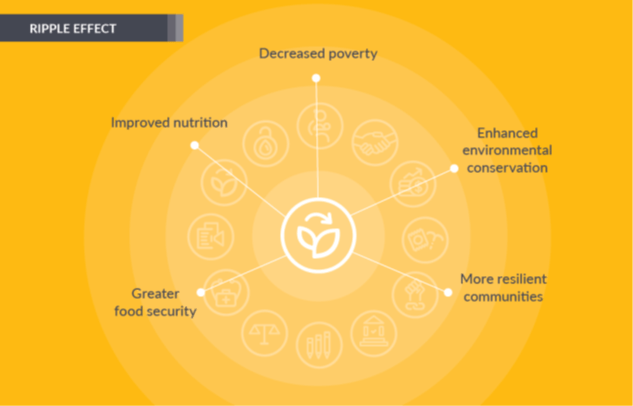
Research shows that greater female representation in parliament leads to more stringent and genuine climate policies. Yet, only 35% of environmental ministries have a gender focal point (womendeliver.org) Increasing involvement of women in decision-making capacities, especially regarding natural resource and land use is sound policymaking for climate-resilient communities, which has a ‘ripple effect’.
UN Women has identified 5 useful ways to build gender equality globally. Some of these actions are policy-based, others also require a shift in mindset for a transformational gender-equal future:
Empower women small-holders: Increasing the capacity of female small-scale farmers and access to productive resources can help promote sustainable agricultural practices. Women often think long-term and when involved in natural resource management, have been shown to use resources more sustainably.
Invest in care: Unpaid and underpaid care work that unequally falls on the shoulders of women historically is a collective good that can benefit the wellbeing of all (individuals, families, communities, and their environments etc), but much like the environment in a neoliberal model, it is treated as a commodity to be exploited. More social value can be attributed to this kind of work, as well as more supportive policies with greater investment in the care economy.
Support women’s leadership: Participation and inclusion of women in leadership and decision-making at all levels of society can help lead to more sustainable outcomes. Decision-making by women often leads us away from individualism, as women have a tendency to consider wider impacts and their families, communities and environments in decision-making. It is particularly important to prioritise Indigenous women’s knowledge in decision-making processes because of the wealth of knowledge they possess about their local communities, natural environments, biodiversity and natural resource management that can benefit climate action.
Fund women’s organisations: empowering women’s civil society organisations can not only help achieve the action above, but it can also help elevate those voices in vulnerable communities that might otherwise be suppressed.
Protect women’s health: Research shows that women are more likely to suffer from climate-related health issues such as disease or weather-related health impacts. Women are the cornerstones of family and community life, therefore impacts to women’s health have flow on effects for collective wellbeing. Moreover, threats to public health are threats to community capabilities, affecting climate resilience.
Although global, equitable gender-focused solutions are not yet a reality, we can draw on the lessons in this year’s IWD theme to embrace women and girls as ‘solution multipliers’ in the face of social and environmental challenges, and break the bias for a more sustainable (and collective) future.
Today Tuesday, 22nd day of the 2nd month in 2022 is Twosday: 22.2.2022.
Whether you are spiritually inclined or not, the repetition of numbers is bound to pop out at you. Today’s date in particular has become a source of existential inquiry It has many people wondering what the greater signification of the day is and what its future consequences may be, evoking something metaphysical in our curiosities.
Numerology or the study of number symbolism can be traced back to Ancient Greece in 500BC when philosopher and mathematician Pythagoras developed a theory between numbers and their association with musical notes, which then became symbolic of individual’s personalities by tracing their birthdates. Numerology has since taken on many forms from biblical, philosophical, and cultural.
To numerologists, the number 2 symbolises harmony and cooperation, the union of basic dualities in nature. Its biblical signification brings about the unification of two forces.
Scientists have said that there is no scientific basis in the theory of today’s date. But at the very least it is culturally rooted in the aspiration to create shared meaning. Of course, I’m going to put an environmental spin on this.
For most of modern history, human societies have created a duality between the natural and human worlds, which has arguably been at the root of much of our demise – both social and environmental. This separation of worlds has been demonstrated to be one of the primary causes of climate change, as humans seek to exploit natural resources.
There has been much work coming from scholarly research and practitioners about the need to end this divide and seek harmony and cooperation between nature and society so that we may really transform the future trajectory of the planet.
So let me plant this seed…
What if today 2.22.2022, the day associated with change, harmony, unification is the day we individually and communally change the dualist way we look at the world and understand that if we, as humans live in harmony with nature, it might have significant transformative and positive impacts on our world and climate? Whether you believe in the power of numbers or not, our dualism has to change, so why not start with today?
According to numerologists, by taking the root numbers of 2.22.2022 today’s date is associated with the “destiny number” 3, which signifies optimism. If nothing else, today can be associated with the day we changed the human-nature duality of modern-day society and started thinking about both the human and natural environments as one union. And that, if we think about long-term impacts on climate change, is much cause for optimism!














 natashachassagne.com