Good Planet News Weekly, 15 October

Wednesday, October 15, 2025

Buen Vivir in Practice — Restoration, Innovation & Community Resilience

Buen Vivir teaches that ecological wellbeing and human dignity are intertwined. This week’s stories, from Australian rivers to Indian streets, Tanzanian hills to Toronto’s buried soils show how communities are regenerating life through care, knowledge, and reciprocity.


1. AI-Driven Coral Reseeding on the Great Barrier Reef (Australia)

Scientists have developed AI-powered coral re-seeding devices that autonomously identify and plant coral substrates across the reef, dramatically increasing restoration speed and accuracy.
Read more →


Buen Vivir connection: Reciprocity with ecosystems, technology as ally, holistic wellbeing.


Why it matters: Manual coral restoration is slow and resource-intensive. These autonomous tools accelerate recovery and extend human care to otherwise unreachable reef areas — a model for coexistence between technology and nature.


2. Noongar-Led Restoration of Collie River Pools (Australia)

The Danju Noongar Landcare group has restored two at-risk river pools in Western Australia’s Upper Collie River, reviving native fish and crustacean habitats while protecting culturally significant waters.
Read more →


Buen Vivir connection: Community stewardship, kinship with land and water, intergenerational care.


Why it matters: These river pools act as ecological refuges during dry spells. The project strengthens biodiversity, cultural continuity, and local stewardship. This is proof that restoration led by Traditional Owners brings enduring ecological and social health.


3. Ecological Entrepreneurs Regenerating Tanzania’s Landscapes

Three innovators from IUCN’s restoration incubation program are transforming degraded lands into sustainable enterprises, from seed banks to soil-health ventures, linking livelihoods and landscape renewal.
Read more →


Buen Vivir connection: Economy rooted in ecology, regeneration through creativity and cooperation.


Why it matters: When communities profit from restoration rather than exploitation, ecological healing becomes self-sustaining. These entrepreneurs show how local enterprise can scale regeneration and resilience from the ground up.


4. Rediscovering Life in 130-Year-Old Soil (Toronto, Canada)

Archaeologists uncovering Toronto’s old waterfront found living seeds, roots, and microorganisms in soil buried for over a century, a testament to nature’s persistence.
Read more →


Buen Vivir connection: Ecological memory, respect for the unseen, continuity across time.


Why it matters: The discovery shows how ecosystems retain latent vitality even after decades of disturbance, a humbling reminder that life endures and can be revived through mindful restoration.


5. Citizen-Led Urban Cooling & Eco-Routing (Pune, India)

Local volunteers in Pune are using open-data mapping tools to measure street-level heat, identify shaded routes, and promote community tree planting, creating cooler, more livable neighborhoods.
Read more →


Buen Vivir connection: Collective knowledge, urban resilience, everyday wellbeing.


Why it matters: As urban heat rises, bottom-up innovations like this protect vulnerable residents, democratise climate data, and show how adaptation can be citizen-driven, not top-down.


🌍 Good Planet News Weekly, 25 September

This week’s good news round-up on September 25, 2025, “Buen Vivir in Action” highlights global community projects promoting ecological balance and reciprocity. From Kolkata’s heritage restoration to Cuba’s microgreen initiative, these stories illustrate efforts in sustainability, cultural identity, and community resilience across diverse locales, emphasizing the vital connection between human dignity and ecological wellbeing.

Date: Thursday, September 25, 2025

Buen Vivir in Action — Community, Reciprocity, and Ecological Balance

No news is good news – besides this good news round-up bringing you a dose of positivity and hope.

Buen Vivir reminds us that ecological wellbeing and human dignity are inseparable. This week’s stories show how communities in all parts of the globe are co-creating futures of reciprocity and resilience, from Havana rooftops to Thai lakes, Australian bushlands to PNG rainforests

1. Kolkata’s Citizens Restore 94 Heritage Buildings (India)

Community donations light up Raj Bhavan, St. Paul’s Cathedral, and more, sparking civic pride and ecological urban renewal.
🔗 Read more →


Buen Vivir principles: Community-led, cultural identity, reciprocity with place.
Why it matters: Heritage revival enhances urban ecological identity, strengthens community pride, and fosters stewardship of public spaces.

Raj Bhavan lit at night
Photo: Times of India

2. Cuba’s Microgreen Revolution

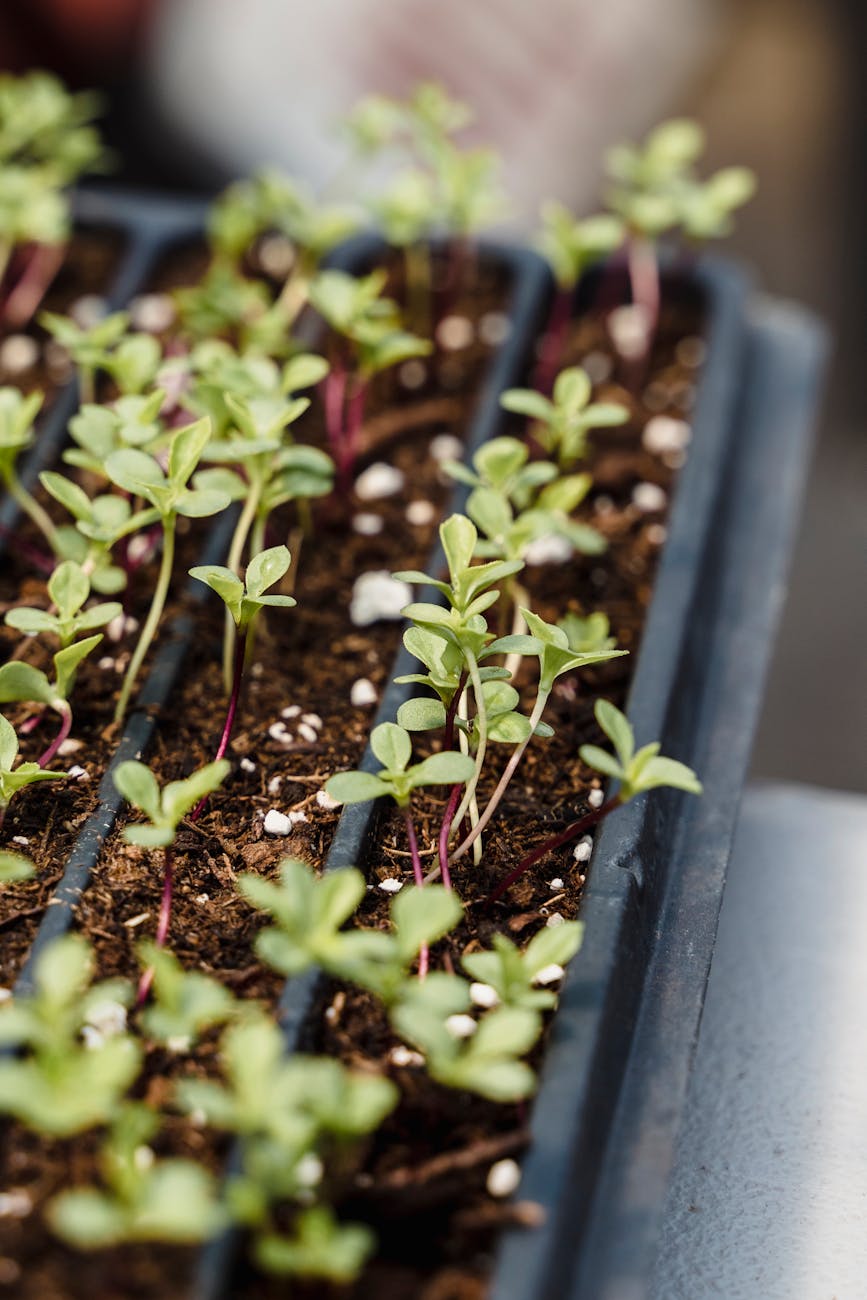
A Havana start-up grows nutritious microgreens in shipping containers, training neighbors and creating new food pathways.
🔗 Read more →


Buen Vivir princples: Food sovereignty, endogenous innovation, holistic wellbeing.
Why it matters: In crisis, communities can seed local resilience — nutritious food, livelihoods, dignity.

Photo by Greta Hoffman on Pexels.com

3. April Salumei Rainforest Conservation (Papua New Guinea)

An innovative new five-year Sustainable Development Plan for the April Salumei Rainforest Community Conservation Project in Papua New Guinea has been developed to provide long-term community benefits. 600,000 hectares of rainforest preserved by landowner-driven conservation and sustainable development planning.
🔗 Read more →

Buen Vivir principles: Holistic rights, ecological reciprocity, plural context.
Why it matters: Avoids 22.8 million tonnes of CO₂, preserves habitat, and strengthens community voice in global climate finance.

Photo by Alex Konehe on Pexels.com

4. Indigenous Fire Stewardship Revives Country (Australia)

First Nations fire practices are reviving habitats, reducing catastrophic bushfires, and strengthening cultural ties to land.
🔗 Read more →

Buen Vivir : Knowledge sovereignty, harmony with nature, collectivewellbeing
Why it matters: Indigenous fire practice reduces catastrophic bushfire risk, restores biodiversity, and reconnects people with Country.

Photo by Buu011fra u00d6zcan on Pexels.com

5. Songkhla Lake Mangrove Revival (Thailand)

Local communities restore 50 hectares of mangroves, forming a Mangrove Rehabilitation Club to sustain long-term care.
🔗 Read more →

Buen Vivir: Community-driven, participation, reciprocity with ecosystems, shared wellbeing.
Why it matters: Restored mangroves stabilize coastlines, nurture fish nurseries, and empower communities to govern local ecosystems.

Mangroves along the wateru2019s edge, shallow water offshore. by Sithara Koramparambil is licensed under CC-CC0 1.0

Paris 2024 Olympics: Transformative Sustainability or Greenwashing Controversy?

The Paris 2024 Olympic Games aimed to be the greenest ever, hosting a summit to accelerate sport’s contribution to sustainable development goals by reducing emissions and implementing carbon mitigation projects. Critics labeled the event a “greenwashing nightmare,” citing vague methods and limited accountability. Despite challenges, the event’s focus on pre-game carbon mitigation represents a significant paradigm shift for major sporting events globally.

Changing the Paradigm of Major Sports Events

The Paris 2024 Olympic Games promised to be the greenest in history. On the Eve of the games, French President Emmanual Macron and the French Development Agency hosted the first Sport for Sustainable Development Summit, which gathered Heads of State, the International Olympic Committee, and the World Health Organization to accelerate the contribution of sport to the United Nations’ Sustainable Development Goals (SDGs) by 2030.

The Olympic Games is one of the largest, most logistically complex global events. Host countries spend billions on new infrastructure, stadiums, athlete accommodation, Olympics venues, and upgrading transport. It is a mammoth undertaking, but it is also carbon intensive. Since Paris started planning for this year’s games in 2017, Paris 2024 aimed to be a game changer in the way that sports approaches its climate impacts.

The aim was to halve the emissions of this year’s games compared to the average of London 2012 and Rio 2016. There were two main goals: to reduce Games-related emissions and support carbon mitigation and capture projects. The former was the most significant. The organising committee pulled out all stops to comprehensively control and assess the entire carbon ecosystem of the event with both direct and indirect scope 1, 2, and 3 emissions from the carbon footprint from athletes and biodiversity impacts, to infrastructure, catering, waste, and even spectator travel.

The organising committee included a world-first Ecological Transformation Committee, setup to control, reduce, and reassess its carbon emissions throughout the run-up to the Games. The Ecological Transformation Committee was chaired by Gilles Boeuf and included nine experts across the areas of carbon impact, biodiversity, circular, economy, energy, catering, digital technology, temporary construction, innovation, and change management. The Committee was joined by representatives from Paris City Council, the French Ministry of Sport, the French Ministerial Delegation for the Olympic and Paralympic Games (DIJOP), the Ile-de-France Region, the Seine-Saint-Denis Department, Métropole du Grand Paris, the National Olympic and Paralympic Committees, and the French Agency for Ecological Transition (ADEME), and a representative from the Paris 2024 Athletes’ Commission. This breadth of expertise gave strength to the objectives they were trying to achieve.

Have we been greenwashed?

The pure scale of any Olympic Games dictates that it will always have a colossal effect on climate and host communities. This has led Paris 2024 to be labelled a ‘greenwashing nightmare’ by many who argue that this event is awash with vague methodology and limited accountability. There seems to be a lack of transparency and third-party monitoring in these Games that only contributes to the image of the Olympic Games being an “Olympic sustainability smokescreen”, as dubbed by Christine O’Bonsawin, an Indigenous sport scholar and member of the Abenaki Nation at Odanak in Quebec. Because of this lack of transparency, climate and sustainability watchdogs argue that we cannot verify claims that Paris 2024 is carbon-neutral or climate positive.

Researchers contend that the International Olympics Committee is one of the biggest greenwashing institutions in the world. Past attempts to assess and compensate the massive environmental and ecological impacts of the Games have been said to perpetuate “carbon colonialism”—offloading emissions through uncertain projects in the Global South that mainly service the Global North.

While I tend to agree with the transformative limitations of unclear climate accounting methodologies and stoic adhesion to market fixes, changing the status quo, especially of a dominant global event and institution such as the Olympics is impossible to achieve overnight. All change has to start somewhere, and the mindset behind such change promises a great deal for future direction.

The difference between the climate approach to the Paris 2024 Olympic Games and other previous major sporting events is that Paris 2024 sought to change the model of carbon assessment from post-games to a pre-game carbon mitigation model.  Through this model, Paris 2024 undertook a holistic vision of offsetting emissions in a major carbon impact reduction target and strategy. This paradigm shift, flipping the mitigation hierarchy to avoiding and reducing emissions first rather than a pure offset and compensation strategy is highly significant.

Throughout modern history, the neoliberal approach to climate change has been more focused on offsets and carbon markets. It is a doctrine that believes in the power of commodities over conservation and that there are limits to environmentalism within the sphere of economic growth.

This ‘ARO’ – avoid, reduce, offset (last) – approach makes it difficult to skip over the typically harder and more expensive, bottom-of-the-pyramid mitigation priorities of avoid and reduce, which can happen when relying on a post-diem assessment that leaps straight to compensation as a first tactic.

What does this mean for other major sporting events?

Major sporting events are responsible for a whopping 50 to 60 billion tonnes of tCO2e globally every year. The most logical approach to reducing the climate impact of sport is to reduce the size and scale of these events. As with the Olympics, in their current formats, these events can never be truly sustainable and will always have a large environmental impact. However, avoiding them altogether is not black and white.

Sports – both taking part and being a spectator – has a proven social and economic benefit that goes beyond socio-economic, geographic, and cultural barriers. Sporting events strengthen social networks and build a sense of belonging for participants, fostering identity and building a sense of community character and cohesion for those involved. They can stimulate economic development for disadvantaged communities and inspire social change. Conversely, they can also be the root cause of human rights violations, slavery, unbridled nationalism, and massive-scale pollution.  

To help address the entire carbon footprint of the Games, Paris 2024 declared that it developed an online tool, Climate Coach for Events for event organisers to understand and reduce the climate impact of major sporting events. This app is free for organisations to use and estimates the carbon footprint across ten categories including catering, accommodation, travel, infrastructure and energy, sports equipment, logistics, site preparation, promotional items, digital material, and waste; and provides a breakdown of the biggest source of emissions. In the same psychology of sports coaching, the app then provides a customised programme of over a hundred tangible measures that organisers can then implement in their planning to reduce their event’s carbon footprint.

Addressing climate impacts at the scale and complexity of something like the Olympics before the event demonstrates that it’s not too farfetched for other large sporting events to follow suit. Assessing the achievement of pre-emptive change rather than just rely on post-diem assessments to understand event impacts is a positive move.

Reinventing mega sporting events to realign them with international climate goals sounds like an impossible task. Of course, there is plenty more that could have always been done at the 2024 Olympics, by all – organisers, spectators, and athletes. The sheer scale of such events needs to be re-evaluated as a matter of urgency, but this event has opened pathways for thinking differently about the impacts and contributions of major sporting events, and other large events in general. Perhaps one of the greatest legacies of the Paris 2024 Olympics is that the opportunity to pioneer sustainable transformative thinking about major events proved not only possible, but even desirable.

In the ever-wise words of Nelson Mandela, “It always seems impossible until it is done”. No other thoughts resonate better with how we can address the world’s most challenging climate issues. The reinvention of future climate action in sport is on the horizon.

Read the 2024 Games sustainability reports here

Holistic Earth Boundaries for a Safe Climate Need Systems Transformation

Photo by Cup of Couple on Pexels.com

A new study published in Nature Journal last Wednesday 31 May by the international scientist group Earth Commission created a holistic measurement framework of quantifiable boundaries for climate, air pollution, phosphorus, and nitrogen contamination of water from fertilizer overuse, groundwater supplies, fresh surface water, the unbuilt natural environment, and the overall natural and human-built environment.

The holistic measuring of the earth’s interlocking ecosystems considers not only the point at which environmental conditions become harmful for people but also the risks for each environmental element, while also considering justice on a local and regional scale. Elements of justice are important for climate change because the groups most vulnerable to climate impacts are those who have contributed least to the climate crisis.

As the authors state, “The stability and resilience of the Earth system and human well-being are inseparably linked, yet their interdependencies are generally under-recognized; consequently, they are often treated independently” – particularly at the policy level – and, “rapid changes to the Earth system undermine critical life-support systems with significant societal impacts already felt, and they could lead to triggering tipping points that irreversibly destabilize the Earth system. These changes are mostly driven by social and economic systems run on unsustainable resource extraction and consumption. Contributions to Earth system change and the consequences of its impacts vary greatly among social groups and countries. Given these interdependencies between inclusive human development and a stable and resilient Earth system (Rockström et al)”.

The Earth Safe Boundaries (ESB) proposed in the framework set out by over 40 scientists, do not represent ‘tipping points’ (although tipping points inform the ESBs), but rather set out safe scientific boundaries for “maintain[ing] and enhanc[ing] the stability and resilience of the Earth system over time, thereby safeguarding its functions and ability to support humans and all other living organisms”.

Climate justice and social justice are inextricably linked. This fact is becoming increasingly recognised on a global stage. In praxis, it requires addressing historic injustices such as colonialism, resource exploitation, and land access that have driven the climate crisis while destroying ecosystems, and livelihoods, and wiping out local economies, biodiversity, culture, and displacing communities. Systems change in local and regional scale development is an important leverage to ensure that we stay within these holistic earth boundaries and address injustices through systems change.

The study concludes that meeting the just boundaries without significant harm to humans and ecosystems requires transformation. While they provide a good tool for the measurement of the earth’s safe boundaries and the threshold for crossing those limits, they do not provide any practical suggestions for that transformation.

“Nothing less than a just global transformation across all ESBs is required to ensure human well-being. Such transformations must be systemic across energy, food, urban and other sectors, addressing the economic, technological, political and other drivers of Earth system change, and ensure access for the poor through reductions and reallocation of resource use. All evidence suggests this will not be a linear journey; it requires a leap in our understanding of how justice, economics, technology and global.”

Rockström et al

In that respect, the ESBs can be seen to complement more practical frameworks for local-level environmental and social wellbeing.

There are many alternative concepts that can empower communities at the local level to address these issues. Many are being embraced on larger scales such as regenerative economies, circular economies, and the doughnut model. In fact, the study authors state that the ESBs look to build upon policy and research on Planetary Boundaries (PBs) framework, doughnut economics, and the Sustainable Development Goals. Yet, if we take a more holistic view of these interlocking systems, it is not only economic models that should be considered but whole-of-society models.

Frameworks like Buen Vivir that seek to address social, economic, and environmental factors at the local levels by empowering local communities to act within ecological and social boundaries can be effective local solutions to the climate crisis while at the same time addressing issues of justice and wellbeing. Models that connect the whole-earth systems including social and environmental wellbeing are best placed to start achieving long-term change that is scaled up to include national and global level policies and consumer market change. They provide viable points of action that is easily implemented and correlated with policy.

In short, scientifically quantifiable boundaries are vital for the future of the planet and humankind, but these must go hand-in-hand with actionable and practical solutions that can be translated on the ground. Transformation of all systems is thus where we must start to ensure that we approach the safe and just boundaries with caution for the future stability and resistance of earth’s interconnected systems.

Good Planet News – 20 February 2023

Photo by Belle Co on Pexels.com
  1. The Australian Federal Government has blocked the development of a coal mine for the first time last week. Plans for the open pit coal mine located near the ecological icon the Great Barrier Reef by Central Queensland Coal were not approved by environment minister Tanya Plibersek, stating “The adverse environmental impacts are simply too great… “The risk of pollution and irreversible damage to the reef is very real.” This is a big win for marine biodiversity and Australian climate action. https://twitter.com/tanya_plibersek/status/1623179206447484928?s=20
  2. In Chile’s Valparaíso region, artisanal fishers have created small grassroots marine reserves to protect and regenerate marine biodiversity, making the region more resilient to climate change. https://news.mongabay.com/2023/02/fishing-communities-create-marine-refuges-to-protect-chiles-biodiversity/
  3. The rise in Citizen Science participation globally is helping scientists tackle biodiversity loss. One of the most successful is the Great Backyard Bird Count, happening now.  Last year, about 385,000 people from 192 countries took part. https://apnews.com/article/great-backyard-bird-count-citizen-science-cornell-audubon-8aff018dd0e36c12f9539698d95758d9
  4. Climate change is creating more dangerous algae blooms, but cutting edge science is harnessing that to create positive solutions to many modern environmental and health problems. Here are five: https://www.nationalgeographic.com/environment/article/5-surprising-ways-algae-is-driving-innovation
  5. OdySea Aquarium is celebrating the hatching of three African penguins listed as endangered by the IUCN, as part of a breeding program committed to the survival of the species. https://apnews.com/article/science-fish-arizona-climate-and-environment-animals-d11e80d946c77fa7dcd13bda50c82224

COP27 – Systems Change for Climate Action

On day 2 of the COP27, session 3: High-level Session on Systems Change and Climate and Sustainability Innovations examined the deep paradigm shift needed for effective climate action. There was one key overarching message that I took from this session that also resonated with my own work: we need a radical rethink of our economic systems, social justice, and the way we approach natural resources.

There were two issues that panelists argued need addressing in terms of innovation if we are to address climate change effectively and timely: 1) decoupling human wellbeing from the use of natural resources; 2) power, or rather the decentralization of power. Both issues are addressed in a Buen Vivir framework, which is one reason why I focus on the concept, not only for social wellbeing but ecological wellbeing too. It ties into yesterday’s discussion on empowering local communities for climate action.

Janez Potocnik, Co-Chair of UN International Resource Panel hit the nail on the head when he argued that we need to move from an economy that sees humans as external to nature, to one which understands humans are a part of nature. He also stated that we need to remove the causes which lead to negative impacts, of which extractivism is a core function because it is a driver of human needs, but it is also the cause of great inequalities.

Janez argued that to live sustainably, we must move to provisioning for human needs, rather than servicing existing paradigms. I argue further that in that, we must also provision for environmental needs. Without taking into consideration the needs natural resources, ecosystems and biodiversity have to continue to function and thrive, we risk destroying them to the detriment of society.

Dr Andres Steer, President of Bezos Earth Fund brought up the critical issue of power and control – that in the absence of empowering local communities to take action on the ground, any advances in innovation (whether that be technological, knowledge, economic, or otherwise) are void. This is perhaps one of the greatest challenges to effective climate action, the ability for decision and policy-makers, and others who hold the balance of power to cede some of that power to local communities to identify and implement solutions.

We see this with the concept of neoliberal development, under which the idea of sustainable development – and multilateral policymaking forums – sit. The overarching paradigm sees one set of values as dominant and therefore urges everyone to take the same approach, without having any idea about local challenges and the context on the ground. Dr Steer urged the UN to consider this transformative climate action, pleading, “as we think about changing the system, let’s not forget that on Monday morning we need to address real problems on the ground.” In other words, high-level aspirational commitments are nice, “and make for good dinner party conversation”, but are not always conducive to feeding effective solutions in real-time.

In closing this session, the facilitator summarised that “we have called for radical rethink. We have called for accepting that we will have to act in crisis. We are not going to be dealing with a world that is not in crisis.”

On that note, it is reassuring to hear the acknowledgment that frameworks and concepts like Buen Vivir, Donut Economics, Degrowth, Circular Society, and others that were once considered too ‘radical’ and pie-in-the-sky, could bring the kinds of holistic empowerment solutions the world needs in times of urgent climate crisis. Now it is about taking these from idea to action.

COP27 – Time to Highlight Local Climate Action

Placards, Climate Change demonstration by Julian Osley is licensed under CC-BY-SA 2.0

COP27 kicked off yesterday in Egypt, with a rockier than expected start. This climate conference has been called the “implementation COP” because of the expectation to negotiate on decisions made at Glasgow (COP26). Yet, there has already been no end of obstructions to progress.

Criticisms began with backlash against Egypt as host country because of a multitude of political scandals, including the fact that it holds approximately 60,000 political prisoners. Before the conference even started there was disappointment as civil society representatives from different African countries struggled to get passes to the events – both undermining the conference’s position as an ‘African COP’, and highlighting the eternal struggles of those most vulnerable to the effects of climate change to be included in key climate decision-making processes.

COP27 started in a less than desirable position as participating countries have failed to act on progress made at Glasgow. Only 24 countries have since updated their pledges, with Australia making the greatest strides – but that has only elevated us from ‘highly unacceptable’ to ‘unacceptable’. Just confirmed is Australia’s bid to host COP31 in 2026, but that brings up the question of legitimacy amidst a renewed focus on new fossil fuel projects.

To make matters worse, the start of the conference was delayed as delegates failed to agree on the agenda for the fortnight. One sticky point has been the inclusion of reparations for loss and damage due to climate change for the most vulnerable. One can see why, nonetheless it is crucial that those in power are held to account.

There have been calls to include a greater emphasis on adaptation in the negotiations. Given the scale of climate-related events globally over the last few years, it would be wise to strengthen community resilience and capacity to adapt.

Given all of these obstacles, there sems that there is little hope to be had in global diplomacy. This predicament powerfully emphasizes the importance of prioritising locally-led climate action and sustainability solutions. Local communities are the best placed to identify the challenges that climate change brings to them, so considering the lack of transformative capacity for global climate diplomacy to respond to the urgency of the situation, greater priority must be paid to empowering locally-identified and led solutions to the climate crisis – both adaptation and mitigation.

Community-managed projects for the conservation of biodiversity and local ecosystems, for example empowers communities to become invested in the local environments, but it also utilises vital local knowledge. Communities that are more socially invested in their environment, are more inclined to look after it and better placed to identify appropriate solutions, albeit with considerable technical and political cooperation. There are multiple substantial benefits. Not only does local climate action lead to better context-specific programs and projects, but they are also generally more equitable and lead to higher social, environmental and economic returns for a community. Locally-led solutions are usually more holistic, with fewer trade-offs between society and nature.

Grassroots projects also raise the bar of optimism on climate, which in turn leads to greater involvement and action. Given the pessimism around the expected outcomes of COP27, I will be encouraging positivity for future climate action. Every Monday I’ll be posting positive local climate news on my socials, as I firmly believe in the power of positivity to bourgeon change.

While COP27 has been led by a rocky start, it still opens up discussion and debate about what is needed at all levels as we head into this dangerous new phase of climate change. And that is cause for hope in my opinion.

A Good Life for the SDGs

Photo by j.mt_photography on Pexels.com

Time to change the lens for sustainability?

The Sustainable Development Goals were adopted by the United Nations in 2015 as a universal call to social and environmental sustainability, with an overarching goal of ending poverty and protecting the planet by 2030.  Universal is the keyword. This means they apply to everyone, everywhere, regardless. This makes them more aspirational than practical and because of this, it’s argued that they are impossible to achieve. Indeed, by all accounts, they are failing. And, we’re running out of time.

The 2022 Progress Report on the SDGs details the immense challenge ahead of us in terms of achieving social, environmental and economic sustainability. The report admits a backward slide against the Goals (albeit in the face of significant “cascading crises”, most notably in terms of poverty, climate change, and environmental indicators.

Climate change and sustainability come hand in hand. A changing climate is a major challenge for social and environmental sustainability. In turn, the way modern society functions is far from sustainable long, or even medium term and is hastening the speed of climatic changes that are occurring.

The IPCC has confirmed that climate change is caused by human activity, and it is happening at a speed faster than first realised. Thwaites “doomsday” Glacier in Antarctica, for example, is melting at a speed faster than could ever have been anticipated, threatening global sea levels to rise up to .6m https://theconversation.com/thwaites-glacier-the-melting-antarctic-monster-of-sea-level-rise-podcast-191057

UN Secretary-General, António Guterres has called the current climate situation a “code red for humanity”. Everyone everywhere will (and already is) experience the wrath of the past decades’ inaction. As I have argued many times, we cannot continue to decouple human and environmental wellbeing. These “cascading crises” are complex, and they are entangled.

The outlook is not good. While it seems like we are on a one-way course for destruction, there is definitely hope in limiting the scale of future destruction, if we band together, separately. That is, if we change divert the approach from ‘universal’ to ‘contextual’. Immediately.

In the words of Sneddon et al. (2006)

“Sustainability may yet be possible if sufficient numbers of scholars, practitioners and political actors embrace a plurality of approaches to and perspectives on sustainability, accept multiple interpretations and practices associated with an evolving concept of “development”, and support a further opening up of local-to-global public spaces to debate and enact a politics of sustainability.”

Because climate change is a global challenge (perhaps the biggest!) with no geographical limits it requires a global response. Let me rephrase that, it requires a response globally, that is anchored in local geographical, climatic, ecological, socio-political, economic, and cultural contexts.

The thing about place is that no one locale is the same. Place is a complex notion. Each comes with its own identity, challenges, and socio-economic situation. The identifying factors aren’t just social, each place is unique with its own environment, biodiversity, ecosystems, topographical, geological, and geographical advantages, and disadvantages. Place influences a person’s identity and empathy towards nature, which plays a role in the motivation for climate and sustainability action. The perception of place is then vital to social and environmental justice at the community level. This makes the community context the most practical viewpoint for addressing social and environmental issues.

What’s more, climate change is not and will not affect each place equally. Each community will mount its own challenges that are unique to that place. So, it is nonsensical to then believe that we can apply a universal approach to these issues, even if they have global scope. Plus, large-scale transformational systemic change is inherently complicated, and especially drawn out – a major issue when dealing with issues on an urgent timescale like climate change.

Global declarations and treaties are a vital part of the international system. They are an important tool to set the wheels in motion for action in all parts of the world, and they outline states’ responsibilities and obligations in responding to challenges that affect us all. But, they are not effective in their own right. International action is firmly squared within the boundaries of neoliberalism, which promotes universal values in line with Western standards, and ignores the diverse realities of communities everywhere. This has indeed been one of the most common critiques in relation to global climate declarations. International climate diplomacy must be coupled with locally anchored solutions within a context that speaks to locally-identified needs and challenges, otherwise, they are all but useless.

What alternative approaches like Buen Vivir do is remove local action for social and environmental justice from ideal and aspirational universal values and provide local communities with agency to drive solutions that meet their realities. As a hypothetical example, let’s look at two climate-related flood disasters, the solutions that are required for (comparably) affluent communities in Northern New South Wales in Australia will not work in the poor communities of Pakistan which are currently experiencing climate flooding of biblical proportions.

 Small-scale transformational change breaks up larger big-picture goals like the SDGs and makes them amenable to place and context. Smaller chunks are easier to swallow and (notwithstanding all the complexities in a community) quicker to achieve real change. Concepts like Buen Vivir also help reconcile the social and environmental aspects, that builds bridges between the two rather than having them almost compete for attention.

Local action for climate change is crucial and Buen Vivir provides a framework for locally driven solutions that build resilience, mitigate impacts, and allow communities to adapt in relation to their own realities. In that respect it provides a tool for increasing social and environmental wellbeing in the face of these challenges. Having local solutions unadulterated by the global agenda yet capable of working together in cooperation with it is vital for transformative action at this point. ‘Together yet apart’ – much like the catchphrase of the COVID lockdown period.

Even the upcoming COP27 in Egypt has recognised the importance of working together for implementation against the old notion of a single negotiated outcome. The Presidency Vision states the need “to replicate and rapidly upscale all other climate-friendly solutions towards implementation in developing countries”. “Together for implementation” is the theme, with the Presidency saying that implementation needs to happen “on time and at scale”, and be “specific, measurable, and impactful”.

Each of the principles of Buen Vivir has the potential to cooperate with the wider global Goals, but leaving it to the communities to identify the needs and respective solutions. I outline just how the principles converge with the Goals in my book and more recently paper published in the Community Development Journal .

Never before has the term “think globally, act locally” been more prevalent than now. And never has the call been more urgent!

Transformation for Climate: but, of what?

The latest warnings from the IPCC predict that the world is heading towards critical temperature limits. We have already reached 1.0 degree of global warming. The IPCC report estimates that global warming is likely to triple to 3.2 degrees unless urgent, radical action is taken immediately. The IPCC warns that incremental change is no longer enough, and what we need now is transformation. But, what does this mean?

The IPCC defines ‘transformation’ as, “a change in the fundamental attributes of natural and human systems.” Is this enough to prevent it from becoming another catchphrase amenable to co-optation as the status quo sees fit?  To avoid perpetuating what UN Secretary-General Antonio Guterres calls, “a litany of broken climate promises” the course will have to change. We are running out of options.

Transformation, therefore, should effectively address and change the structural and systemic causes of social and environmental injustices that impede any genuine change. Confronting the crisis requires urgent political and societal change.

Transformation then is not only about technology and energy policy, but also a holistic approach to how we govern society on an interwoven planet. So, when we talk about transformation, we also have to talk about what type of transformation, who is involved, how, and at what scale.

The type of transformation that can see us through the change we need is plural, locally embedded, embraces all forms of knowledge (not only technological), and is inclusive of all geographic, cultural, socio-economic, developmental, and linguistic realities. It also needs to transform behaviours and practices from a largely anthropocentric model of society to a more holistic view that embraces a human society interwoven in harmony with nature.

To speak in metaphors of interwoven systems, humans have long viewed the world like a double helix, one strand representing nature as a living being, necessary for life, and the other strand representing society seeking to dominate nature and control it. The two strands coil around each other but running in opposite directions, their purpose intertwined, yet never touching. Yet, nature and society are more like an intricately woven tapestry. One loose thread in one part, can see the rest come completely undone. We are part of nature and any attempts at transformation to save it from climate change must recognise this.

Transformation is more than about scientific and technological mitigation strategies. Part of this is shifting mentalities firmly towards a post-extractive economy, not only discussing transition. The transition to just climate policies is important, we have to get it right, but merely focusing on discussions of what it looks like takes away from the immediate radical change that is needed and the larger goal of what comes after. Continual discussion about transitions without immediate action only sustains current convictions, planted in short-term fixes.

A hybrid approach that incorporates daily social transformation with the ultimate vision of what needs to be achieved to limit global warming will help achieve both long and short-term goals. In the quest for daily transformation, education plays a major role. That is, education on all levels, formal, in the home, in communities, and in policy. Education must be strategic not to continue the messages of the past. The transformation of education thus must also be systemic. I will discuss the transformation of education in my next post.

Post-Extractive Circular Society

The theme of Earth Day yesterday was “Invest in our Planet”. The question needs to be asked, at which point does the fix-all economic narrative become redundant? While we do need future investment in new technologies, we can no longer hide behind the rhetoric of techno-fixes for reducing the amount of carbon in the atmosphere. Yes, technology and will play a crucial role in transformation, but relying on it to achieve the real physical change that is needed in urgency is not the solution. Perpetuating the myth that we can build our way out of this through technology that supports exponential economic growth is dangerously digging us a deeper grave.

The IPCC report states that other mitigation strategies are likely to be prohibitively expensive, and that is the excuse used in ideological stances to abandon any kind of concrete change. According to Munich Re Research, in 2020, climate change disasters have led to estimated global economic losses of A$272 billion. Yet, when we look at the costs of inaction the argument mounts that it may very well be more economically expensive to continue down the same path of slow transition and economic justification, but more than that it will also cost us much more than money, it will and is starting to cost lives. In 2020, there were approximately 31 million internally displaced people from climate change impacts alone. By 2050, think tank IEP estimates that at least 1.2 billion people could be displaced by climate-related events. We can therefore legitimately argue that there is more at stake than economic growth.

A move to a low carbon society will not be effective at its aims if it destabilises ecosystems and puts efforts to protect biodiversity in jeopardy. This is why transformation must not only be about the types of energy we transition to, but also how much and on what scale. For true transformation, the use of renewable resources has to be in harmony with nature, as well a society. After all, even renewal resources perpetuate an extractive mentality on a large-scale as part of a neoliberal economic growth strategy. Our global economic model, for starters, has to evolve and transform with the challenges that lie ahead.

The ways we transform the energy sector should also be plural, locally embedded, and embrace all forms of knowledge to sustain transformation in harmony with nature. Policy strategies like moving towards a circular economy, which embed multiple approaches with the same aims such as Donut Economics, Buen Vivir, Regeneration, or even Degrowth can be part of a just economic transformation towards a post-extractive society. Instead of thinking about it as only economic as we do with a circular economy, by embracing these various approaches in tandem, we can then evolve towards a circular society – renewing and regenerating all life in harmony with the natural environment.

The UN calls for “transformation [that] requires attacking the root causes that generate and reproduce economic, social, political and environmental problems and inequalities, not merely their symptoms” but there is no concrete blueprint for this type of transformation. Many scholars have argued that this requires visioning a post-extractive society that focuses on regenerative approaches to society and natural resource management.

In regeneration, it’s important to look beyond fossil fuels and carbon emissions because of the circular effects of environmental destruction. Here, the models and frameworks I mentioned earlier work within a regenerative, circular society, such as Donut Economics, Buen Vivir, and Degrowth, for example. For future actions that are compatible with nature, so that the environment may regenerate and flourish, incorporating the rights of nature into future global and national climate policies would be beneficial.

Regenerative alternatives to development promote a state where human society and nature live in harmony. Regenerative approaches are not just about reaching Net Zero, but they are holistic and integral in that they seek to leave environments and their societies in a better state, having a positive impact on human wellbeing and the environment as a whole. 

So, in summary, when we think about the type and scale of change needed to tackle the environmental challenges that lie ahead, transformation must be plural, locally embedded, and embrace all forms of knowledge, particularly Indigenous knowledges. It is regenerative, seeking structural and systemic change which includes, as a foundation, formal and informal education systems. Transformative regenerative approaches work in harmony with nature and seek to enhance environmental wellbeing, as well as societal wellbeing. Transformation then, upends the way the world currently works, towards a more socially and environmentally sustainable future, not solely towards better economic growth.

An Incredible Force: Women and Climate Action

Happy International Women’s Day!

On International Women’s Day 2022 we reiterate the need for a gender-equal world and celebrate the power of women and girls in the fight against climate change and its impacts – Gender equality today for a sustainable tomorrow is the theme this year.

In a statement for UN Women, Executive Director Sima Bahous said, “Climate change is a threat multiplier. But women, and especially young women, are solution multipliers.”

Imagine the transformational change we can achieve if we prioritize gender equality globally – not just in privileged seats – and give precedence to the important role women and girls have to play in a sustainable future!

“Imagine a gender-equal world.

A world free of bias, stereotypes, and discrimination.

A world that is diverse, equitable, and inclusive.

A world where difference is valued and celebrated.

Together we can forge women’s equality.

Collectively we can all #BreakTheBias.” –

http://www.internationalwomensday.com

Breaking the bias…that is the first step. While women have a vital role to play in the health of our future planet, we are more vulnerable to the many impacts of climate change than men.

As Sima says, “The accelerating crises of climate change and environmental degradation are disproportionately undermining the rights and wellbeing of women and girls. They are multiplying insecurity at all levels, from individual and household to national. Rising temperatures, extended droughts, violent storms and floods are resulting in loss of livelihoods, they are depleting resources and fueling migration and displacement. The latest major IPCC report on climate change, and our Secretary-General, have warned us that ‘nearly half of humanity is living in the danger zone – now, ’and that ‘many ecosystems are at the point of no return – now’.”

As the COVID pandemic has shown us, we now have the opportunity to rewrite the future trajectory of climate action. We can rethink and re-imagine avenues of transformative change for a sustainable future. The global shifts in policy and behaviour in relation to COVID have shown us that swift and radical change is possible when we have the momentum. The urgent nature of climate change gives us this impetus.

Part of this shift will require us to re-evaluate and transform the way we understand wealth in the economy. Currently in a neoliberal system wealth is measured by GDP. This measure of how a nation is fairing has been widely criticized over the past few years as outdated and dangerous in the era of climate change. An extractive economy is at the heart of economic growth policies that promote economic wealth accumulation above all else. Studies that show the vital importance of the care economy – of which women play a large part – tell us that we need to shift away from resource-heavy extractivism and better value collective wellbeing to ensure social sustainability throughout generations, and ultimately positively impacting ecological sustainability.

Valuing social and ecological wealth, to which women often pay greater focus in decision-making, helps to augment a communities’ Socio-Eco Wellbeing.

Women and girls are positive agents and super changemakers when it comes to climate action because of the tendency to think about collective wellbeing and the ecological impacts on their families and communities. Around the world, there are some amazing women and girls leading the charge in both formal and informal ways against climate change.

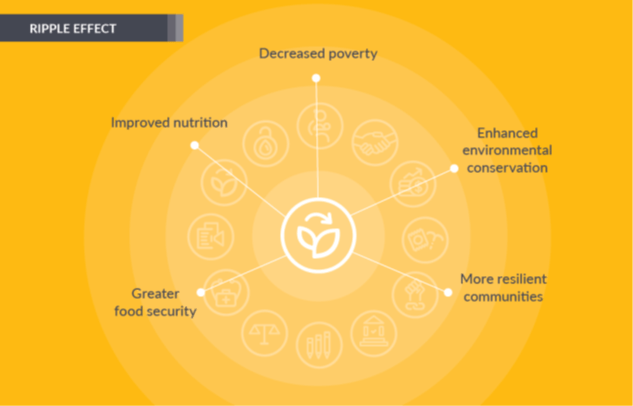
Research shows that greater female representation in parliament leads to more stringent and genuine climate policies. Yet, only 35% of environmental ministries have a gender focal point (womendeliver.org) Increasing involvement of women in decision-making capacities, especially regarding natural resource and land use is sound policymaking for climate-resilient communities, which has a ‘ripple effect’.

Source: http://www.womendeliver.org

UN Women has identified 5 useful ways to build gender equality globally. Some of these actions are policy-based, others also require a shift in mindset for a transformational gender-equal future:

  1. Empower women small-holders: Increasing the capacity of female small-scale farmers and access to productive resources can help promote sustainable agricultural practices. Women often think long-term and when involved in natural resource management, have been shown to use resources more sustainably.
  2. Invest in care: Unpaid and underpaid care work that unequally falls on the shoulders of women historically is a collective good that can benefit the wellbeing of all (individuals, families, communities, and their environments etc), but much like the environment in a neoliberal model, it is treated as a commodity to be exploited. More social value can be attributed to this kind of work, as well as more supportive policies with greater investment in the care economy.
  3. Support women’s leadership: Participation and inclusion of women in leadership and decision-making at all levels of society can help lead to more sustainable outcomes. Decision-making by women often leads us away from individualism, as women have a tendency to consider wider impacts and their families, communities and environments in decision-making. It is particularly important to prioritise Indigenous women’s knowledge in decision-making processes because of the wealth of knowledge they possess about their local communities, natural environments, biodiversity and natural resource management that can benefit climate action.
  4. Fund women’s organisations: empowering women’s civil society organisations can not only help achieve the action above, but it can also help elevate those voices in vulnerable communities that might otherwise be suppressed.
  5. Protect women’s health: Research shows that women are more likely to suffer from climate-related health issues such as disease or weather-related health impacts. Women are the cornerstones of family and community life, therefore impacts to women’s health have flow on effects for collective wellbeing.  Moreover, threats to public health are threats to community capabilities, affecting climate resilience.

Although global, equitable gender-focused solutions are not yet a reality, we can draw on the lessons in this year’s IWD theme to embrace women and girls as ‘solution multipliers’ in the face of social and environmental challenges, and break the bias for a more sustainable (and collective) future.